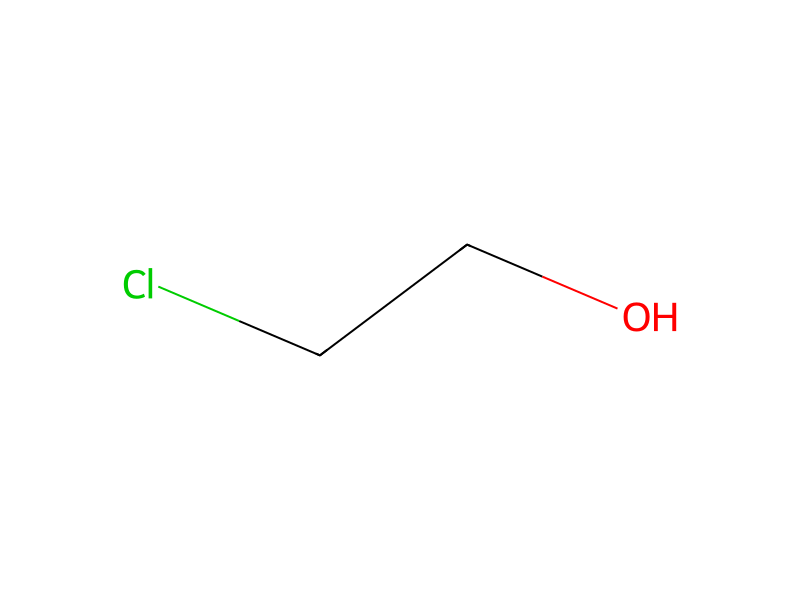
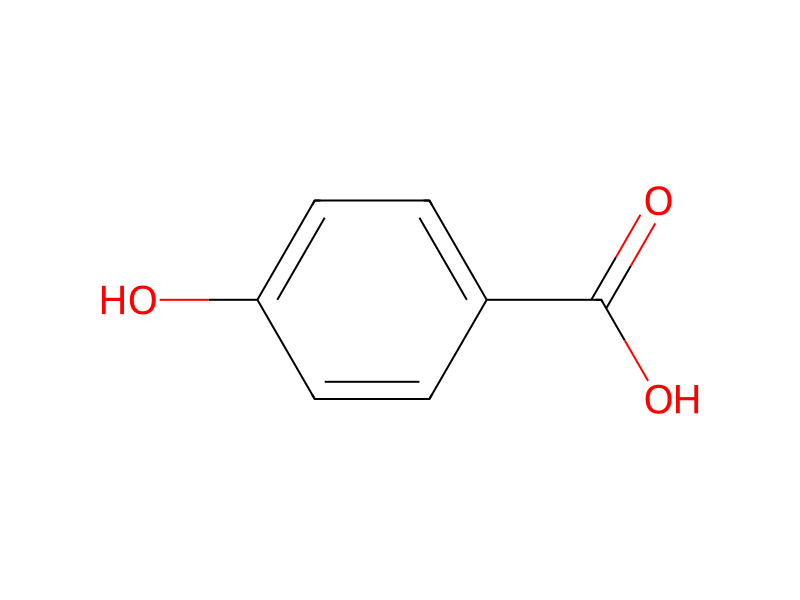
2-Chloroethanol → 4-(2-Hydroxyethoxy)benzenecarboxylic acid
Reaction equation

[CH2:1](Cl)[CH2:2][OH:3].[OH:5][C:6]1[CH:14]=[CH:13][C:9]([C:10]([OH:12])=[O:11])=[CH:8][CH:7]=1>[I-].[K+]>[OH:3][CH2:2][CH2:1][O:5][C:6]1[CH:14]=[CH:13][C:9]([C:10]([OH:12])=[O:11])=[CH:8][CH:7]=1Participants
4
Reactant 2
Product 1

Reagents, catalysts & solvents 1

Procedure
That is, as the reaction formula described below, ethylene chlorohydrin and 4-hydroxybenzoic acid are refluxed under heating in an aqueous alkali solution using potassium iodide as a catalyst to obtain 4-(2-hydroxyethoxy)benzoic acid, the product is then reacted with vinyl (meth)acrylate in THF (tetrahydrofuran) having added thereto lipase PS and a small amount of p-methoxyphenol to form 4-(2-propenoyloxyethoxybenzoic acid) (meth)acrylate, and by esterifying the (meth)acrylate thus obtained in methylene chloride with an isosorbide derivative in the presence of DCC (dicyclohexylcarbodiimide) and DMAP (dimethylaminopyridine), the desired product of the formula (b1) can be obtained.
Workup
- temperatureare refluxed
- temperatureunder heating in an aqueous alkali solution
Sources & evidence
- ORD record
- ord-a1a674910f5f4077baf2608ddf1496be
- Source dataset
- uspto-grants-2001_06
- Patent number
- US06248259B1
Reaction notes
Loading…