Sodium Dithionite → 7-Chloro-3,4-dihydro-6-methyl-2(1H)-quinoxalinone
Reaction equation

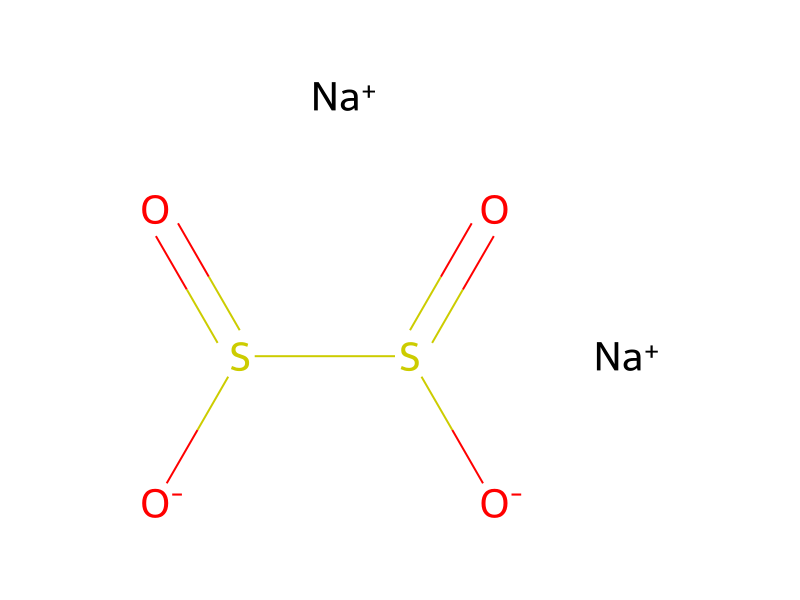
[K+].[Cl:2][C:3]1[C:8]([CH3:9])=[CH:7][C:6]([NH:10][CH2:11][C:12]([O-])=[O:13])=[C:5]([N+:15]([O-])=O)[CH:4]=1.S(S([O-])=O)([O-])=O.[Na+].[Na+]>O>[Cl:2][C:3]1[CH:4]=[C:5]2[C:6]([NH:10][CH2:11][C:12](=[O:13])[NH:15]2)=[CH:7][C:8]=1[CH3:9]Participants
4
Reactant 2

Product 1

Reagents, catalysts & solvents 1

Conditions
- Temperature
- 80 °C
Procedure
To a stirred bright orange solution of N-(4′-chloro-5′-methyl-2′-nitrophenyl)glycine potassium salt (0.097 g, 0.36 mmol) in water (5.0 mL) at 80° C., sodium dithionite (0.500 g, 2.87 mmol) was added in two equal portions. It instantly formed a white suspension, which was stirred at 80° C. for 1 h. It was then cooled at room temperature and the solid was vacuum filtered, washed with water (5.0 mL), and dried in vacuo to yield 0.062 g (86%) of the title compound as a white powder; 1H NMR (DMSO-d6): δ 2.10 (s, 3H), 3.66 (s, 2H, J=1.2 Hz), 5.98 (s, 1H), 6.53 (s, 1H), 6.67 (s, 1H), 10.20 (s, 1H).
Workup
- customIt instantly formed a white suspension, which
- temperatureIt was then cooled at room temperature
- filtrationfiltered
- washwashed with water (5.0 mL)
- customdried in vacuo
Sources & evidence
- ORD record
- ord-86ed3149f4ed468793c73142ff3799ff
- Source dataset
- uspto-grants-2001_06
- Patent number
- US06251903B1
Reaction notes
Loading…