Acetic Acid → HCID 178478156, compound
Reaction equation

[NH2:1][C:2]1[C:10]2[C:5](=[N:6][CH:7]=[N:8][C:9]=2[NH:11][C:12]2[CH:17]=[CH:16][CH:15]=[C:14]([Cl:18])[CH:13]=2)[NH:4][N:3]=1.C(O)(=O)C.[NH:23]1[CH:27]=[CH:26][N:25]=[C:24]1[CH:28]=O>CO>[Cl:18][C:14]1[CH:13]=[C:12]([NH:11][C:9]2[N:8]=[CH:7][N:6]=[C:5]3[NH:4][N:3]=[C:2]([N:1]=[CH:28][C:24]4[NH:23][CH:27]=[CH:26][N:25]=4)[C:10]=23)[CH:17]=[CH:16][CH:15]=1Participants
5
Reactant 3

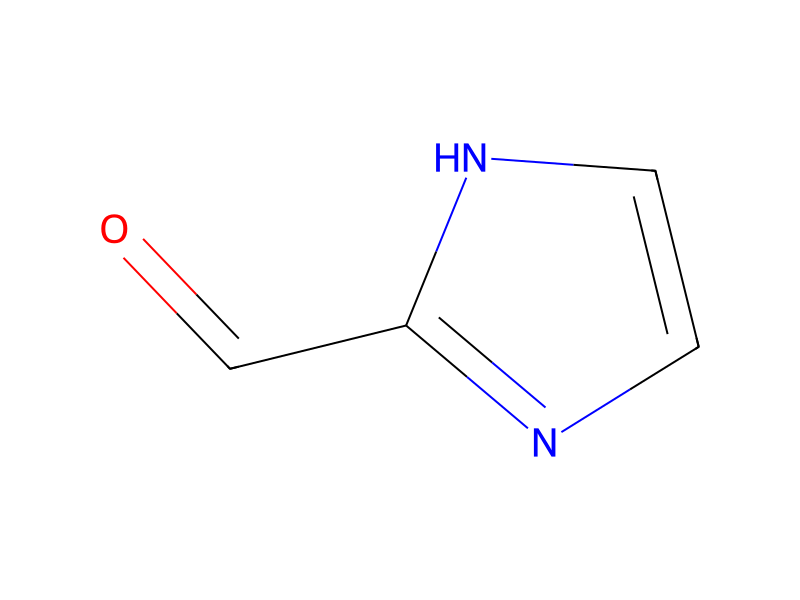

Product 1

Reagents, catalysts & solvents 1

Procedure
Analogously to Example 32, 261 mg (1.00 mmol) of 3-amino-4-(3-chlorophenylamino)-1H-pyrazolo[3,4-d]pyrimidine (see Step 1.6) and 180 mg of acetic acid are dissolved in 26 ml of methanol and reacted with 144 mg (1.5 mmol) of imidazole-2-carbaldehyde to form 4-(3-chloro-phenylamino)-3-[(1H-imidazol-2-yl)-methyleneamino]-1H-pyrazolo[3,4-d]pyrimidine. Reduction of the above intermediate in 15 ml of DMEU with 8 ml (8 mmol) of DIBAL-H, analogous working-up and digestion in ethanol yield 4-(3-chlorophenylamino)-3-(1H-imidazol-2-yl)-methylamino]-1H-pyrazolo[3,4-d]pyrimidine; HPLC: tRet(grad20-100/20) 5.8; FABMS: (M+H)+=341.
Sources & evidence
- ORD record
- ord-f5f05200ad6049288b34357866569fe7
- Source dataset
- uspto-grants-2001_06
- Patent number
- US06251911B1
Reaction notes
Loading…