Acetone → HCID 10270588, compound
Reaction equation

[Cl:1][C:2]1[CH:9]=[CH:8][CH:7]=[C:6]([Cl:10])[C:3]=1[CH:4]=O.[CH3:11][C:12]([CH3:14])=[O:13].[OH-].[K+]>C(O)C>[Cl:1][C:2]1[CH:9]=[CH:8][CH:7]=[C:6]([Cl:10])[C:3]=1/[CH:4]=[CH:11]/[C:12](=[O:13])/[CH:14]=[CH:4]/[C:3]1[C:2]([Cl:1])=[CH:9][CH:8]=[CH:7][C:6]=1[Cl:10]Participants
5
Reactant 3

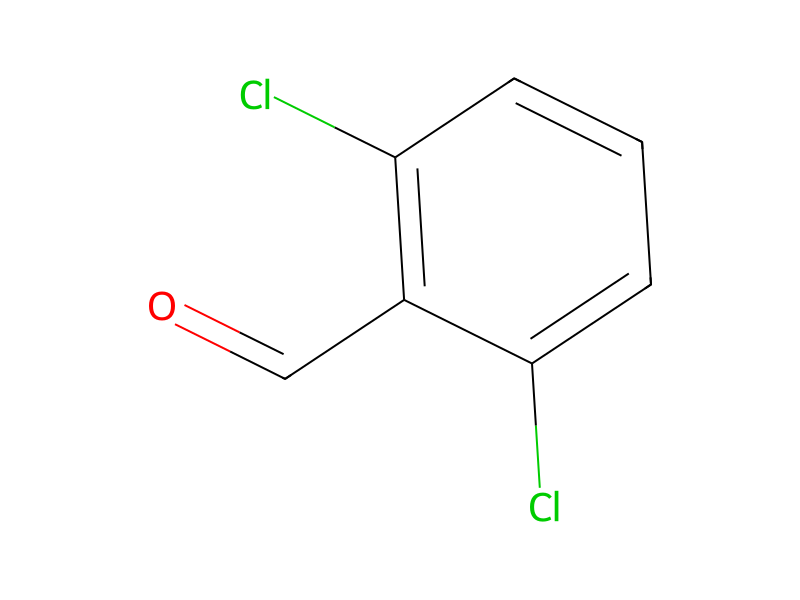

Product 1

Reagents, catalysts & solvents 1

Procedure
(73) To a 0.33 M solution of 2,6-dichlorobenzaldehyde (1.75 g, 10 mmol) and acetone (290 mg, 5 mmol) in 30 ml of ethanol was added 5 ml of 40% potassium hydroxide at 10° C. After stirring for 18 hr at room temperature, a solid precipitated and was filtered. The precipitate was recrystallized from ethanol to afford 1.46 g (78.5%) of pale yellow, cotton-like flakes: mp 154.0-154.4° C. (lit. mp 145-146° C., Unterhalt, Arch. Pharm., 1978, 311, 262-267). 1H NMR (250 MHz) δ 7.85-7.79 (d, 2 H), 7.40-7.36 (d, 4 H), 7.26-7.19 (d, 2 H), 7.24-7.18 (m, 2 H); 13C NMR (62.7 MHz) 189.1, 137.6, 135.4, 133.3, 132.5, 130.2, 129.1 ppm.
Workup
- customa solid precipitated
- filtrationwas filtered
- customThe precipitate was recrystallized from ethanol
- customto afford 1.46 g (78.5%) of pale yellow, cotton-like flakes
Sources & evidence
- ORD record
- ord-2ee32add643b4c15bcbaa18c14f24136
- Source dataset
- uspto-grants-2005_06
- Patent number
- US06906105B2
Reaction notes
Loading…