Lauric Acid → Vinyl laurate
Reaction equation

[C:1]([O:4][CH:5]=[CH2:6])(=[O:3])[CH3:2].[C:7](O)(=O)[CH2:8][CH2:9][CH2:10][CH2:11][CH2:12][CH2:13][CH2:14][CH2:15][CH2:16]CC.C([O-])(=O)C.[Na+]>S(=O)(=O)(O)O>[C:1]([O:4][CH:5]=[CH2:6])(=[O:3])[CH2:2][CH2:7][CH2:8][CH2:9][CH2:10][CH2:11][CH2:12][CH2:13][CH2:14][CH2:15][CH3:16]Participants
5
Reactant 3
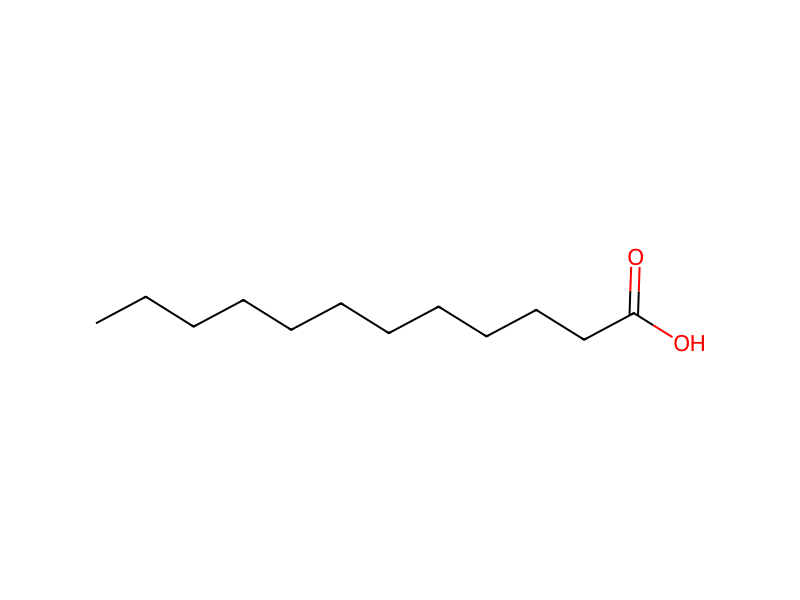


Product 1

Reagents, catalysts & solvents 1

Procedure
51.5 g of vinyl acetate and 20 g (0.1 mole) of lauric acid were introduced into a 100-ml two-necked round-bottomed flask. The acid was dissolved by warming and 0.4 g of mercuric acetate was added under a stream of nitrogen. The mixture was thus maintained for 30 minutes at ambient temperature, with magnetic stirring, under nitrogen. Two drops of sulfuric acid (95%) were then added and the reaction mixture was heated under reflux for 3 hours. It was then permitted to cool to ambient temperature and 0.21 g of sodium acetate was then added.
Workup
- dissolutionThe acid was dissolved
- temperatureby warming
- temperaturethe reaction mixture was heated
- temperatureunder reflux for 3 hours
- temperatureto cool to ambient temperature
Sources & evidence
- ORD record
- ord-acc90eb0bce34f2fac801039456b536e
- Source dataset
- uspto-grants-1990_11
- Patent number
- US04970115
Reaction notes
Loading…