Sodium Chloride → 2-(4-Nitrophenylthio)pyrimidine
Reaction equation

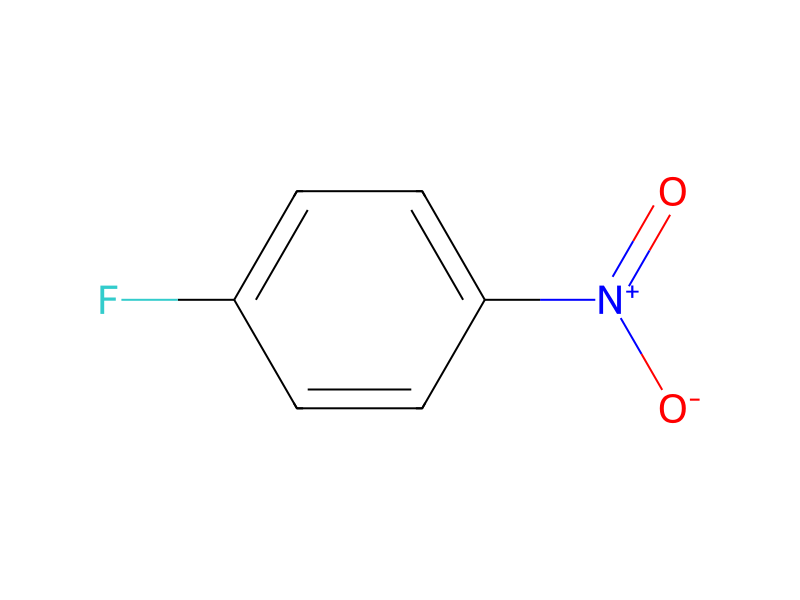
[SH:1][C:2]1[N:7]=[CH:6][CH:5]=[CH:4][N:3]=1.F[C:9]1[CH:14]=[CH:13][C:12]([N+:15]([O-:17])=[O:16])=[CH:11][CH:10]=1.[OH-].[K+].[Cl-].[Na+]>O.CS(C)=O>[N+:15]([C:12]1[CH:13]=[CH:14][C:9]([S:1][C:2]2[N:7]=[CH:6][CH:5]=[CH:4][N:3]=2)=[CH:10][CH:11]=1)([O-:17])=[O:16]Participants
7






Procedure
A mixture of 1.12 g (10 mmoles) of 2-mercaptopyrimidine, 1.4 (10 mmoles) of 1-fluoro-4-nitrobenzene, 0.5 of potassium hydroxide and 10 ml of dimethylsulfoxide were heated at 120°-130° C. for 6 hours and then cooled. After pouring into a mixture of ice, water and sodium chloride the mixture was allowed to stand for 30 minutes and then filtered. The solid was washed with water, air dried and chromatographed on silica gel using ethyl acetate/hexane (1:1 by volume) as the eluent. The fractions containing the product were combined and concentrated to give 1 g (43%) of the product as yellow rods, mp 103°-104° C.
Workup
- temperaturewere heated at 120°-130° C. for 6 hours
- temperaturecooled
- filtrationfiltered
- washThe solid was washed with water, air
- customdried
- customchromatographed on silica gel
- additionThe fractions containing the product
- concentrationconcentrated
Sources & evidence
- ORD record
- ord-c56284a6f72c42cd94129b5466279754
- Source dataset
- uspto-grants-1990_11
- Patent number
- US04973599
Reaction notes
Loading…