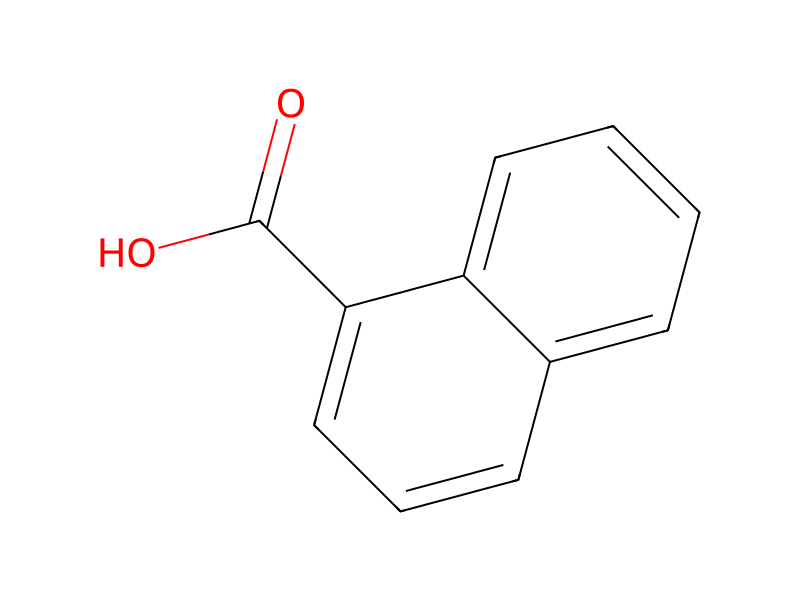
1-Naphthoic acid → 4-Chloronaphthalene-1-carboxylic acid
Reaction equation

[Br:1][C:2]1[C:11]2[C:6](=[CH:7][CH:8]=[CH:9][CH:10]=2)[C:5]([C:12]([O:14][C:15]([C:17]2[C:26]3[C:21](=[CH:22][CH:23]=[CH:24][CH:25]=3)[C:20]([Br:27])=[CH:19][CH:18]=2)=[O:16])=[O:13])=[CH:4][CH:3]=1.[C:28]1([C:38]([OH:40])=[O:39])[C:37]2[C:32](=[CH:33][CH:34]=[CH:35][CH:36]=2)[CH:31]=[CH:30][CH:29]=1.BrBr.[Cl:43]Cl>>[Br:1][C:2]1[C:11]2[C:6](=[CH:7][CH:8]=[CH:9][CH:10]=2)[C:5]([C:12]([O:14][C:15]([C:17]2[C:26]3[C:21](=[CH:22][CH:23]=[CH:24][CH:25]=3)[C:20]([Br:27])=[CH:19][CH:18]=2)=[O:16])=[O:13])=[CH:4][CH:3]=1.[Cl:43][C:31]1[C:32]2[C:37](=[CH:36][CH:35]=[CH:34][CH:33]=2)[C:28]([C:38]([OH:40])=[O:39])=[CH:29][CH:30]=1Participants
6




Procedure
A process for the preparation of 4-bromo-naphthalic acid anhydride by bromination of an alkali metal salt of naphthalic acid in an aqueous medium at a pH of 6.8 to 9 by dropwise adding 0.55 to 0.65 mol of bromine per mol of naphthalic acid and oxidizing the bromine at the same pH-value with chlorine. By this process 4-bromo-naphthalic acid anhydride can be obtained in a quantitative yield whereby the formation of 4-chloro-naphthalic acid is avoided.
Sources & evidence
- ORD record
- ord-3ebb7487147e441c9cc96a456a2fad81
- Source dataset
- uspto-grants-1976_05
- Patent number
- US03954810
Reaction notes
Loading…