Sodium aluminate → Molecular sieve
Reaction equation

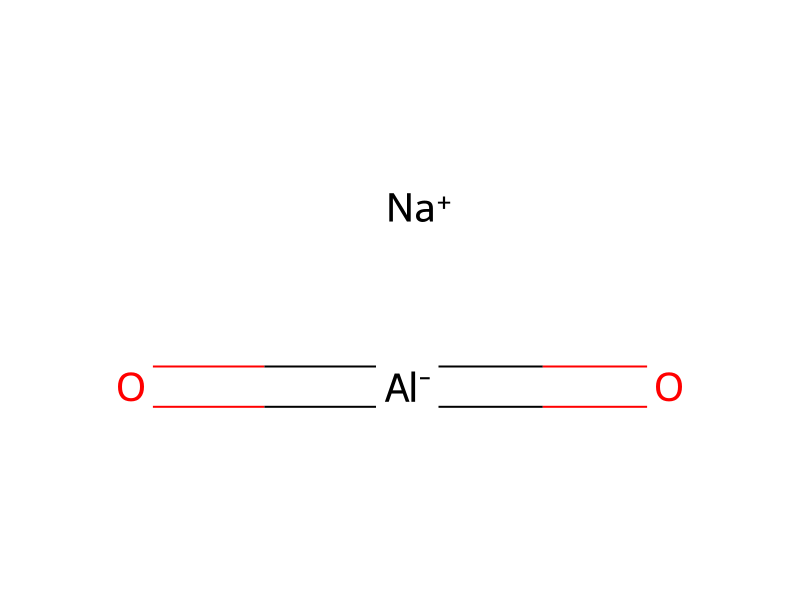
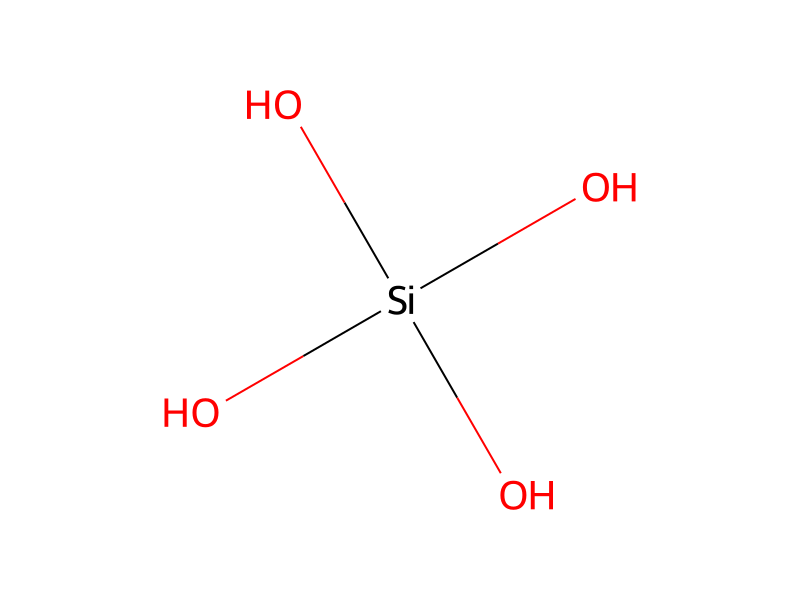
[Si:1]([O-])([O-:4])([O-:3])[O-:2].[Na+:6].[Na+].[Na+].[Na+].[Si:10](O)([OH:13])([OH:12])[OH:11].O=[Al-:16]=O.[Na+]>>[O-:3][Si:1]([O-:4])=[O:2].[O-:12][Si:10]([O-:13])=[O:11].[Na+:6].[Al+3:16]Participants


Procedure
The thus obtained polymeric sodium silicate is used as a silicic acid source, to which is added an alkali aluminate, for example, sodium aluminate (a molar ratio of Na2O to Al2O3 1.5 - 3.0 : 1) in a molar ratio of SiO2 to Al2O3 of 1.0 - 2.0 : 1. Thereby, the sodium aluminate is bonded with polymeric sodium silicate by the lattice siloxane structure as a frame to produce sodium aluminosilicate, (1.0 - 2.0) SiO2.Al2O3.(2.0 - 1.0)Na2O. Here, part of sodium hydroxide is isolated according to an amount of aluminate ion bonded. Further, an amount of a water soluble magnesium salt, for example, magnesium chloride corresponding to the alkali amount of the sodium aluminosilicate is added in a molar ratio of MgO to Al2O3 of 1.0 - 2.0 : 1 to effect double decomposition. Thus, the desired magnesium aluminosilicate is obtained.
Sources & evidence
- ORD record
- ord-0b73de908b5a46b0aaac9fe29c5f35de
- Source dataset
- uspto-grants-1976_05
- Patent number
- US03959444
Reaction notes
Loading…