p-Toluenesulfonic acid → HCID 15054216, compound
Reaction equation

[Cl:1][C:2]1[CH:9]=[CH:8][C:5](C=O)=[CH:4][C:3]=1[O:10][CH3:11].[CH:12]([O:17][CH3:18])([O:15][CH3:16])OC.C1(C)C=CC(S(O)(=O)=O)=CC=1.C([O-])(O)=O.[Na+]>CO.C(Cl)Cl>[CH3:18][O:17][CH:12]([O:15][CH3:16])[C:5]1[CH:8]=[CH:9][C:2]([Cl:1])=[C:3]([O:10][CH3:11])[CH:4]=1Participants






Procedure
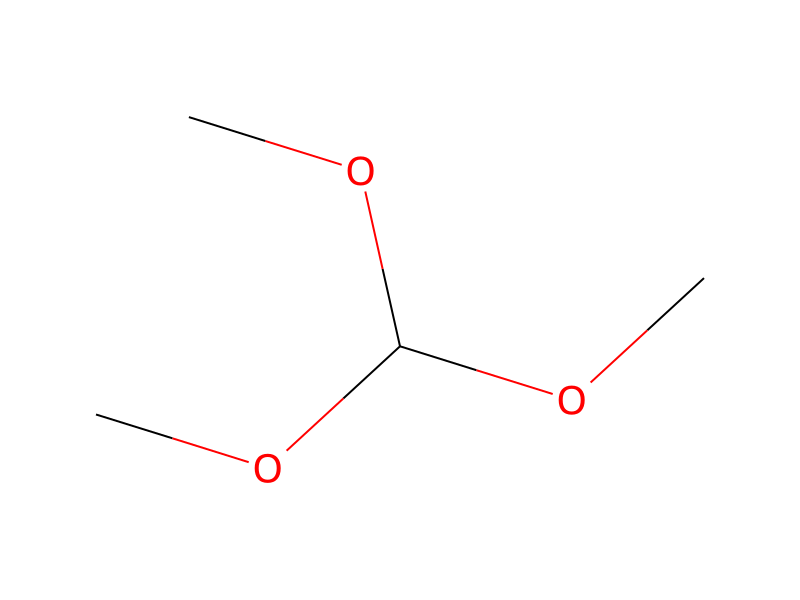
A heterogenous mixture of methanol (2 ml), CH2Cl2 (3 ml), 4-chloro-3-methoxybenzaldehyde (2 g, 11.7 mmol; prepared essentially as described by R. M. Riggs et al., J. Med. Chem., 30 1887, 1987.), trimethyl orthoformate (1.7 ml, 15.5 mmol) and a large crystal of p-toluenesulfonic acid was stirred at room temperature for one hour. Additional MeOH (1 ml) and a crystal of p-toluenesulfonic acid were added and the solution was warmed until homogenous. Upon completion of the reaction, the solution was stirred 5 min with excess solid NaHCO3 and rotory evaporated to remove solvents. The paste was dissolved in 40 ml EtOAC, partitioned against dilute NaHCO3 solution, and evaporated to yield a light brown oil. The reaction was repeated with another 2 g of 4-Chloro-3-methyoxybenzaldehyde and both product oils were combined to give 4.37 g (86%) of dimethyl acetal 3.
Workup
- customprepared essentially
- temperaturethe solution was warmed until homogenous
- customUpon completion of the reaction
- customevaporated
- customto remove solvents
- dissolutionThe paste was dissolved in 40 ml EtOAC
- custompartitioned against dilute NaHCO3 solution
- customevaporated
- customto yield a light brown oil
Sources & evidence
- ORD record
- ord-90fe1757db724f6089161a51929352bb
- Source dataset
- uspto-grants-1996_12
- Patent number
- US05582980
Reaction notes
Loading…