Carbon Dioxide → Adipic Acid
Reaction equation

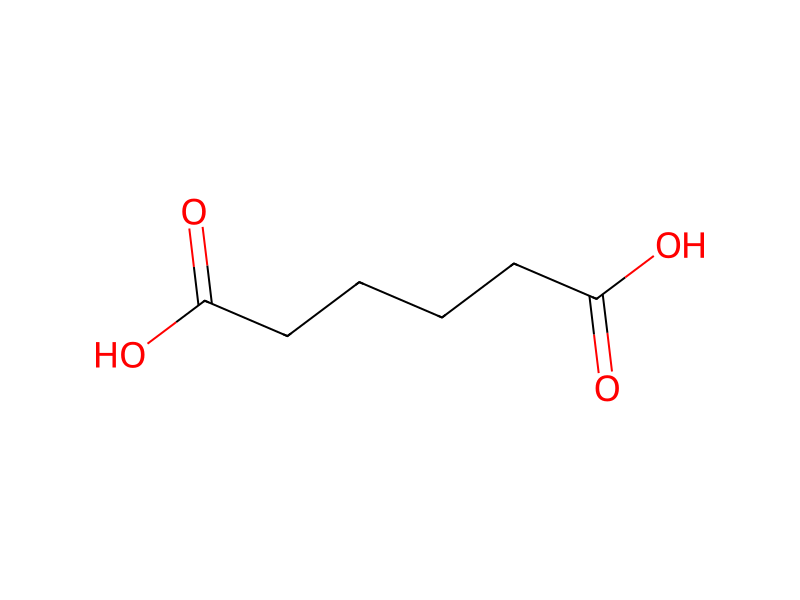
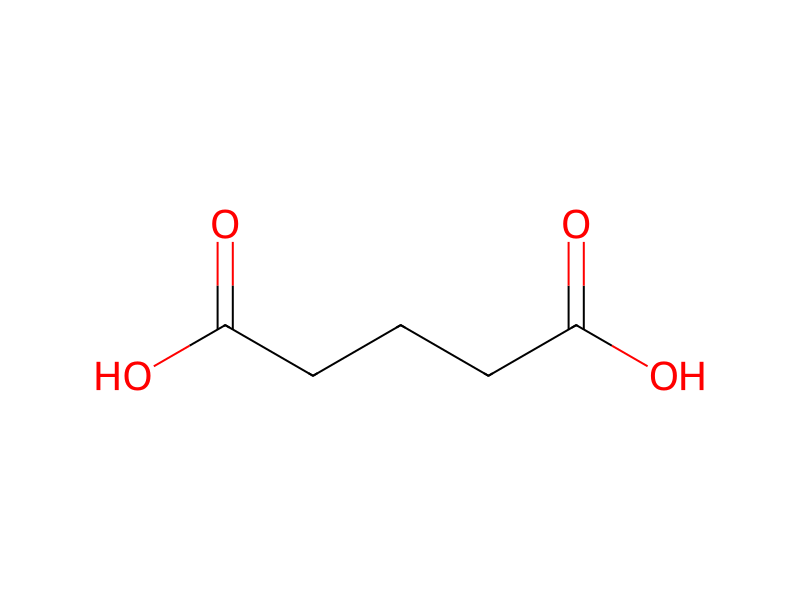
[C:1]([OH:7])(=[O:6])[CH2:2][C:3](O)=O.[C:8](=[O:10])=[O:9].[C:11]([OH:18])(=[O:17])[CH2:12][CH2:13][C:14]([OH:16])=[O:15].[C:19]1(=O)[O:24][C:22](=[O:23])[CH2:21][CH2:20]1>>[C:14]([OH:16])(=[O:15])[CH2:13][CH2:12][CH2:3][CH2:2][C:1]([OH:7])=[O:6].[C:22]([OH:24])(=[O:23])[CH2:21][CH2:20][CH2:19][C:8]([OH:10])=[O:9].[C:11]([OH:18])(=[O:17])[CH2:12][CH2:13][C:14]([OH:16])=[O:15]Participants
7



Procedure
Elsewhere, that treatise notes that malonic acid loses carbon dioxide on heating above its melting point, and in aqueous solution, undergoes decarboxylation at 70° C. (vol. 14: 794-795); that succinic acid sublimes when heated below its 188° C. melting point, dehydrates at its melting point, and forms a cyclic anhydride, succinic anhydride having mp 119.6° C. (vol. 21: 848-849); and that adipic acid, unlike glutaric acid and succinic acid, does not readily form a cyclic anhydride, but decomposes to cyclopentanone above 225° C. (vol. 1: 510-513).
Workup
- temperatureon heating above its
- customat 70° C.
Sources & evidence
- ORD record
- ord-3ef6f013924b490c8b9ad7189b60e805
- Source dataset
- uspto-grants-1991_04
- Patent number
- US05004509
Reaction notes
Loading…