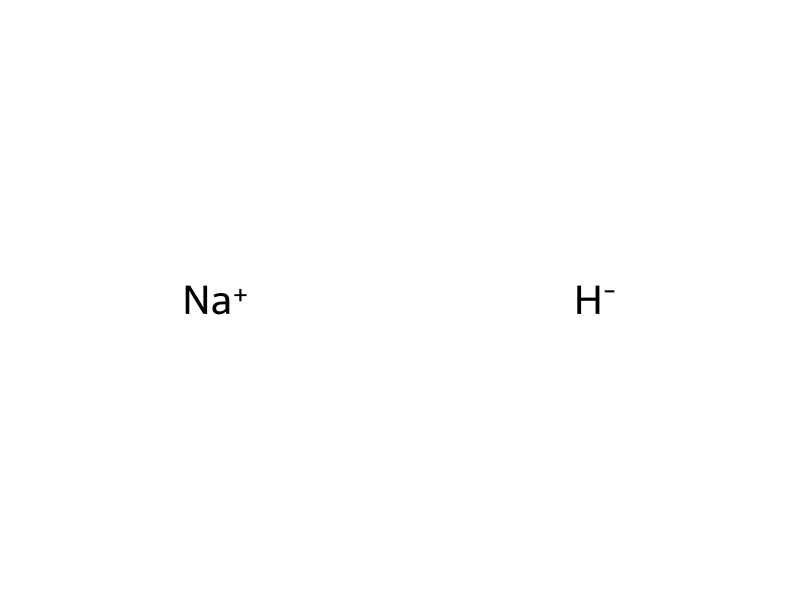
Sodium hydride → 5,11-Dihydro-11-[6-(1-piperidinyl)hexyl]-6H-pyrido[2,3-b][1,4]benzodiazepin-6-one
Reaction equation

C1(C[N:8]2[C:14](=[O:15])[C:13]3[CH:16]=[CH:17][CH:18]=[CH:19][C:12]=3[NH:11][C:10]3[N:20]=[CH:21][CH:22]=[CH:23][C:9]2=3)C=CC=CC=1.[H-].[Na+].Br[CH2:27][CH2:28][CH2:29][CH2:30][CH2:31][CH2:32][N:33]1[CH2:38][CH2:37][CH2:36][CH2:35][CH2:34]1>CN(C)C=O>[N:33]1([CH2:32][CH2:31][CH2:30][CH2:29][CH2:28][CH2:27][N:11]2[C:12]3[CH:19]=[CH:18][CH:17]=[CH:16][C:13]=3[C:14](=[O:15])[NH:8][C:9]3[CH:23]=[CH:22][CH:21]=[N:20][C:10]2=3)[CH2:38][CH2:37][CH2:36][CH2:35][CH2:34]1Participants
Reactant 3


Product 1

Reagents, catalysts & solvents 1
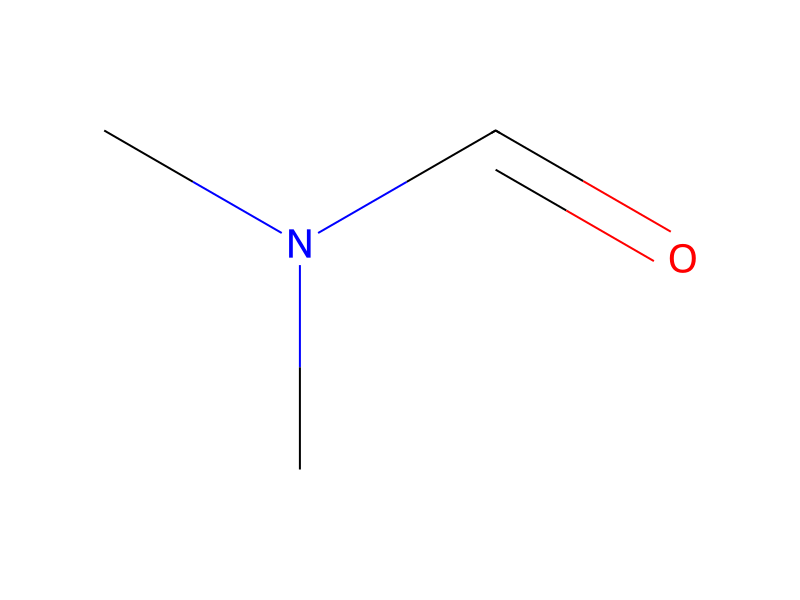
Conditions
- Temperature
- 60 °C
Procedure
24.1 g (0.08 mol) of 5,11-dihydro-5-(phenylmethyl)-6H-pyrido[2,3-b][1,4]benzodiazepin-6-one (m.p. 152°-154° C.) were dissolved in 180 ml of anhydrous dimethylformamide, then 2.88 g (0.096 mol) of an 80% sodium hydride dispersion in mineral oil were added at ambient temperature and the resulting mixture was stirred for 45 minutes at 60° C. Then 23.8 g (0.096 mol) of 1-bromo-6-(1-piperidinyl)hexane were added dropwise and the mixture was heated to 120° C. for 30 minutes. After evaporation in vacuo, the residue was partitioned between dichloromethane and 5% aqueous hydrochloric acid, the aqueous phase was separated off and made alkaline with sodium hydroxide. The oil separated was taken up in dichloromethane, the solvent was distilled off in a water jet vacuum, the oily, highly viscous residue was carefully stirred with 250 g of 100% orthophosphoric acid and 7.5 g of phenol and the resulting mixture was heated to 120° C. for 3 hours. The mixture cooled to 70° C. was stirred into 2 kg of crushed ice, then made significantly alkaline by the addition of caustic soda and extracted exhaustively with dichloromethane. The dichloromethane extracts were dried over sodium sulphate and evaporated down, the residue remaining was digested with 10 ml of boiling ether and filtered while hot. The ether was evaporated off, the residue was purified by chromatography on silica gel (Macherey-Nagel, 0.2-0.5 mm) using dichloromethane/methanol/cyclohexane/ethyl acetate/conc. ammonia 59/7.5/7.5/25/1 (v/v/v/v/v) as eluant. By evaporating the appropriate fractions and subsequent recrystallisation from acetonitrile, colourless crystals with a melting point of 131°-132° C. were obtained in a yield of 21.8 g (72% of theory) which were found, according to their mixed melting point, thin layer chromatogram, IR, UV., 1H-NMR spectra, to be totally identical to a preparation prepared according to Example 6.
Workup
- temperaturethe mixture was heated to 120° C. for 30 minutes
- customAfter evaporation in vacuo
- customthe residue was partitioned between dichloromethane and 5% aqueous hydrochloric acid
- customthe aqueous phase was separated off
- customThe oil separated
- distillationthe solvent was distilled off in a water jet vacuum
- stirringthe oily, highly viscous residue was carefully stirred with 250 g of 100% orthophosphoric acid and 7.5 g of phenol
- temperaturethe resulting mixture was heated to 120° C. for 3 hours
- temperatureThe mixture cooled to 70° C.
- stirringwas stirred into 2 kg of crushed ice
- additionmade significantly alkaline by the addition of caustic soda
- extractionextracted exhaustively with dichloromethane
- dry with materialThe dichloromethane extracts were dried over sodium sulphate
- customevaporated down
- filtrationfiltered while hot
- customThe ether was evaporated off
- customthe residue was purified by chromatography on silica gel (Macherey-Nagel, 0.2-0.5 mm)
- customBy evaporating
- customthe appropriate fractions and subsequent recrystallisation from acetonitrile, colourless crystals with a melting point of 131°-132° C.
- customwere obtained in a yield of 21.8 g (72% of theory) which
- additionmixed melting point, thin layer chromatogram, IR, UV
- customprepared
Sources & evidence
- ORD record
- ord-795c94f6f52045abbbec281450d82ab0
- Source dataset
- uspto-grants-1991_04
- Patent number
- US05006522
Reaction notes
Loading…