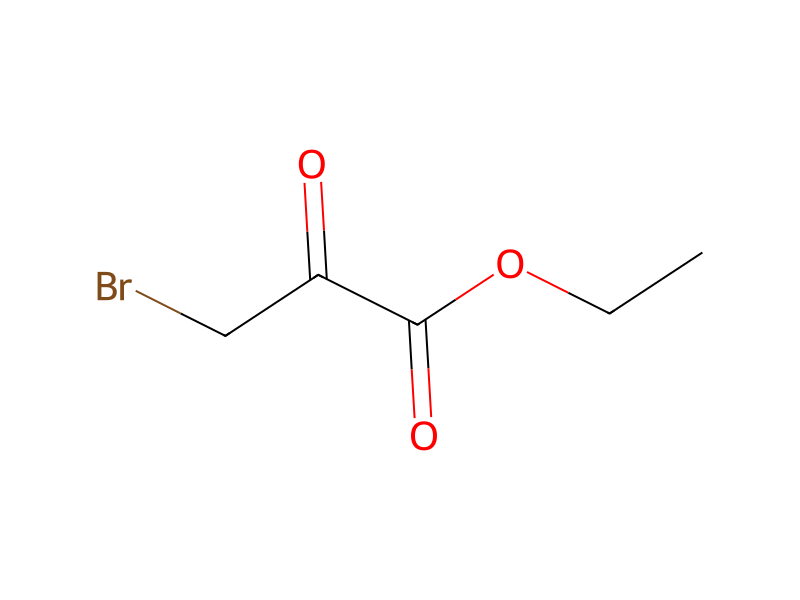
Ethyl bromopyruvate → Ethyl 2-(3-nitrophenyl)-1,3-thiazole-4-carboxylate
Reaction equation

Br[CH2:2][C:3](=O)[C:4]([O:6][CH2:7][CH3:8])=[O:5].[N+:10]([C:13]1[CH:14]=[C:15]([C:19](=[S:21])[NH2:20])[CH:16]=[CH:17][CH:18]=1)([O-:12])=[O:11]>C(O)C>[N+:10]([C:13]1[CH:14]=[C:15]([C:19]2[S:21][CH:2]=[C:3]([C:4]([O:6][CH2:7][CH3:8])=[O:5])[N:20]=2)[CH:16]=[CH:17][CH:18]=1)([O-:12])=[O:11]Participants
4
Reactant 2

Product 1

Reagents, catalysts & solvents 1

Conditions
- Temperature
- 50 °C
Procedure
A solution of ethyl bromopyruvate (2.14 g) in ethanol (5 ml) was added to a suspension of 3-nitrobenzenecarbothioamide (2.00 g) in ethanol (15 ml) at room temperature. The reaction mixture was stirred at 50° C. for 2 hours and ten minutes. The solvent was removed by evaporation under reduced pressure. To the residue was added a saturated aqueous solution of sodium bicarbonate (50 ml) and ethyl acetate (100 ml). The precipitates were collected by filtration and recrystallized from a mixture of chloroform and n-hexane to give ethyl 2-(3-nitrophenyl)-4-thiazolecarboxylate (1.59 g).
Workup
- customThe solvent was removed by evaporation under reduced pressure
- additionTo the residue was added a saturated aqueous solution of sodium bicarbonate (50 ml) and ethyl acetate (100 ml)
- filtrationThe precipitates were collected by filtration
- customrecrystallized from a mixture of chloroform and n-hexane
Sources & evidence
- ORD record
- ord-7824e0311eb54006a79b4e1c61ab71f7
- Source dataset
- uspto-grants-1991_04
- Patent number
- US05010093
Reaction notes
Loading…