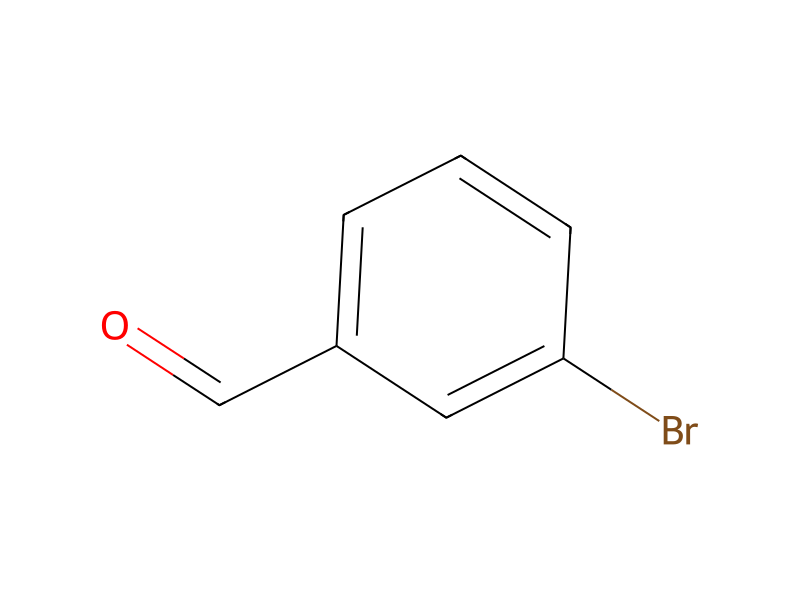
3-Bromobenzaldehyde → HCID 19817991, compound
Reaction equation

Br[C:2]1[CH:3]=[C:4]([CH:7]=[CH:8][CH:9]=1)[CH:5]=[O:6].[C:10]1([C:16]#[C:17][CH2:18][CH2:19][CH2:20][CH2:21][C:22]#[CH:23])[CH:15]=[CH:14][CH:13]=[CH:12][CH:11]=1>>[C:10]1([C:16]#[C:17][CH2:18][CH2:19][CH2:20][CH2:21][C:22]#[C:23][C:2]2[CH:3]=[C:4]([CH:7]=[CH:8][CH:9]=2)[CH:5]=[O:6])[CH:15]=[CH:14][CH:13]=[CH:12][CH:11]=1Participants
3


Procedure
Similarly, following the procedure of Example 7(b), 3-bromobenzaldehyde was reacted with 1-phenylocta-1,7-diyne to yield 3-(8-phenyl-1,7-octadiynyl)benzaldehyde which was reduced to 3-(8-phenyloctyl)benzaldehyde and the latter was reacted as described in Example 35(a),(b) and (c) to give 3-(2-carboxyethylthio)-3-[3-(8-phenyloctyl)phenyl]-2-hydroxypropanoic acid, dipotassium salt, hydrate as a mixture of isomers, -log KB value 6.2.
Sources & evidence
- ORD record
- ord-9192432106434f85876c8d0ba4217bea
- Source dataset
- uspto-grants-1991_07
- Patent number
- US05034537
Reaction notes
Loading…