Calcium Carbonate → HCID 57157594, compound
Reaction equation

[ClH:1].[NH2:2][C:3]1[C:8]([O:9][CH3:10])=[C:7]([NH2:11])[CH:6]=[CH:5][C:4]=1[O:12][CH3:13].[OH-].[Na+].[C:16](=[O:19])([O-:18])[O-].[Ca+2].Cl[C:22]([O:24][CH2:25][CH2:26][Cl:27])=[O:23].O1[CH2:33][CH2:32]OCC1>O>[Cl:1][CH2:32][CH2:33][O:18][C:16]([NH:2][C:3]1[C:8]([O:9][CH3:10])=[C:7]([NH:11][C:22]([O:24][CH2:25][CH2:26][Cl:27])=[O:23])[CH:6]=[CH:5][C:4]=1[O:12][CH3:13])=[O:19]Participants
7
Reactant 5

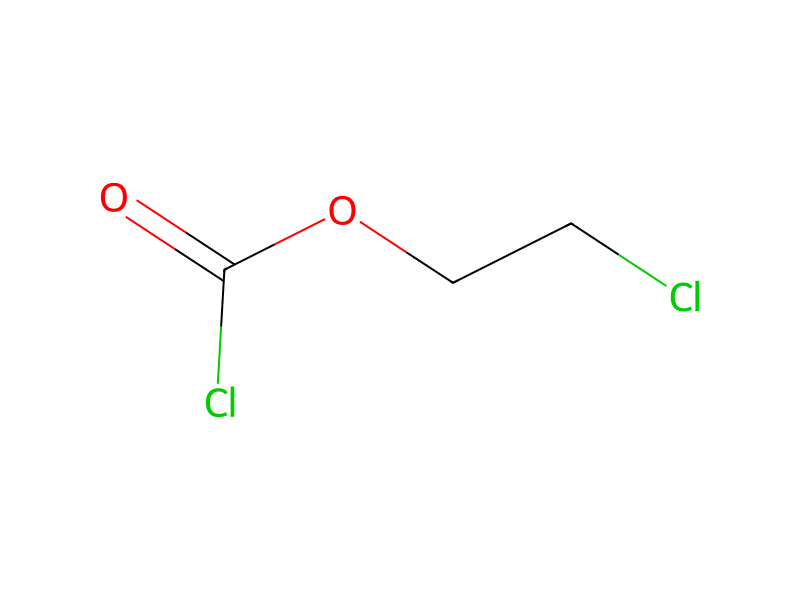



Product 1

Reagents, catalysts & solvents 1

Conditions
- Temperature
- 90 °C
Procedure
0.05 mole (12.05 g) of 2,4-diamino-1,3-dimethoxybenzene hydrochloride was added to 90 ml of dioxane, followed by 10 ml of 10N sodium hydroxide. The temperature was raised to the region of 85°-90° C. and then 10 g of calcium carbonate were added. 15 g of β-chloroethyl chloroformate were then introduced with stirring. Upon completion of the addition, heating was maintained at 90° C. for 15 minutes. The reaction mixture was diluted with 500 g of iced water. Upon acidification of the reaction mixture, the expected product slowly precipitated. After thorough draining, washing with water and drying under vacuum in the presence of P2O5, it could be recrystallized from benzene. It melted at 105° C.
Workup
- temperatureThe temperature was raised to the region of 85°-90° C.
- additionUpon completion of the addition
- temperatureheating
- customUpon acidification of the reaction mixture, the expected product slowly precipitated
- washAfter thorough draining, washing with water
- dry with materialdrying under vacuum in the presence of P2O5, it
- customcould be recrystallized from benzene
Sources & evidence
- ORD record
- ord-e81114acf47649269760e0f02a34f335
- Source dataset
- uspto-grants-1990_10
- Patent number
- US04960432
Reaction notes
Loading…