1-Chloro-2,4-Dinitrobenzene → 4-Chloro-M-phenylenediamine
Reaction equation

C(N=C(N)N)#N.C(O)(=O)C.C(O)(=O)C.C(N)=N.[Cl:18][C:19]1[CH:24]=[CH:23][C:22]([N+:25]([O-])=O)=[CH:21][C:20]=1[N+:28]([O-])=O>[Ni].CO>[Cl:18][C:19]1[CH:24]=[CH:23][C:22]([NH2:25])=[CH:21][C:20]=1[NH2:28]Participants
7
Reactant 4



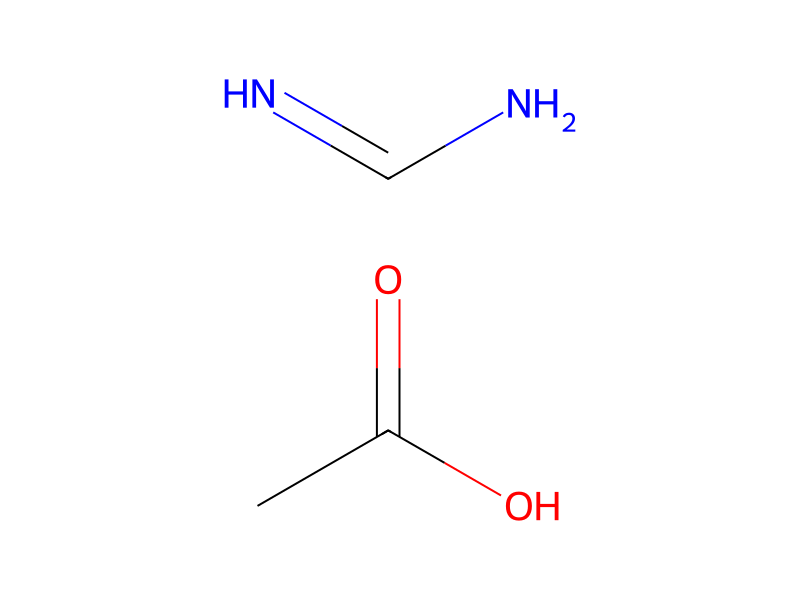
Product 1

Reagents, catalysts & solvents 2


Procedure
3 g of dicyanodiamide, 3 g of acetic acid, 2 g of Raney nickel (60%, aqueous), and 120 ml of methanol are introduced in an autoclave equipped with gas introduction stirrer. Under a hydrogen pressure of 4 bar and a temperature of 25° C., the dicyanodiamide is hydrogenated to the formamidine acetate. 40.8 g of 1-chloro-2,4-dinitrobenzene are then added to the autoclave, and the hydrogenation is carried out at a pressure of 10 bar and a temperature of 60° C. The hydrogenation time is 11/4 hours. 1-Chloro-2,4-diaminobenzene, 98% pure (analysed as 1-Chloro-2,4-acetamidobenzene by liquid chromatography), is obtained in quantitative yield.
Workup
- customequipped with gas introduction stirrer
- customa temperature of 25° C.
- customa temperature of 60° C
- custom4 hours
Sources & evidence
- ORD record
- ord-5480d25f5c234755a313636db19f5ba1
- Source dataset
- uspto-grants-1990_10
- Patent number
- US04960936
Reaction notes
Loading…