Ammonia → 6-Aminohexanoic Acid
Reaction equation

[C:1]1(=[O:8])[NH:7][CH2:6][CH2:5][CH2:4][CH2:3][CH2:2]1.C(CCCCC(O)=O)=[O:10].N.[H][H]>O>[NH2:7][CH2:6][CH2:5][CH2:4][CH2:3][CH2:2][C:1]([OH:8])=[O:10]Participants
6
Reactant 4

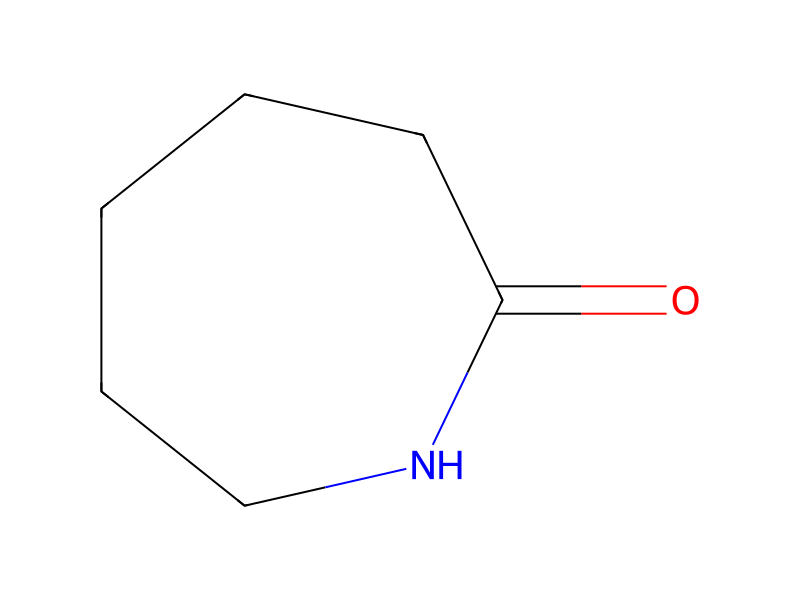


Product 1

Reagents, catalysts & solvents 1

Procedure
Finally, DE-A-No. 3,602,377 discloses a process for preparing caprolactam wherein the 5-formylvaleric ester is initially hydrolyzed with water in the presence of a catalyst from 30° to 200° C. to 5-formylvaleric acid which is reacted with ammonia and hydrogen in the presence of a solvent and hydrogenation catalyst under a superatmospheric pressure at from 50° to 150° C. to give 6-aminocaproic acid, the ammonia and the catalyst are separated off, and the resulting solution of 6-aminocaproic acid is heated to 150°-370° C. to form caprolactam. For this process to be practised in industry, the yields must be improved. Moreover, this process requires an additional hydrolysis stage.
Sources & evidence
- ORD record
- ord-9ab972e368824a9cbcb1fc175c5b0394
- Source dataset
- uspto-grants-1990_10
- Patent number
- US04963672
Reaction notes
Loading…