Dimethyl Sulfate → 4,4'-Dichlorodiphenyl sulfone
Reaction equation

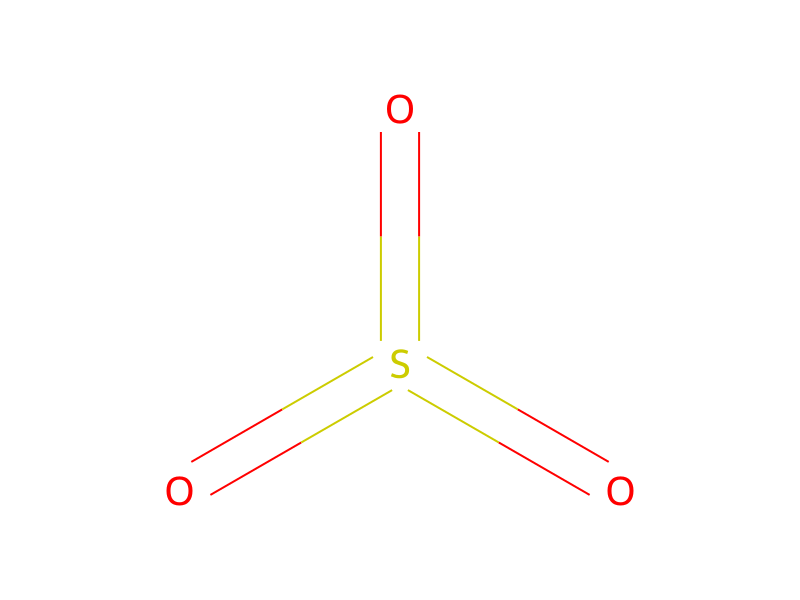
[S:1](=[O:4])(=O)=[O:2].S(OC)(OC)(=O)=O.S(OS(OC)(=O)=O)(OC)(=O)=O.[Cl:23][C:24]1[CH:29]=[CH:28][CH:27]=[CH:26][CH:25]=1>>[Cl:23][C:24]1[CH:29]=[CH:28][C:27]([S:1]([C:27]2[CH:28]=[CH:29][C:24]([Cl:23])=[CH:25][CH:26]=2)(=[O:4])=[O:2])=[CH:26][CH:25]=1Participants
5




Procedure
When the components are passed once through the reactor at a rate giving a residence time of from 1 to 3 minutes, the conversion rate is 57%. This can be increased to 91% conversion by continuously pumping the effluent reaction mixture back to the fixed bed of the reactor to give an average residence time of approximately 15 minutes. No advantage is gained, we have found, by first converting sulfur trioxide and dimethyl sulfate to reactive dimethyl pyrosulfate and then reacting the latter with chlorobenzene. Precipitating the product in chlorobenzene instead of aqueous sulfuric acid gives bis(4-chlorophenyl) sulfone having a purity of >99.5%.
Workup
- customgiving a residence time of from 1 to 3 minutes
- temperatureThis can be increased to 91% conversion
- customthe effluent reaction mixture back to the fixed bed of the reactor
- customto give an average residence time of approximately 15 minutes
- customPrecipitating the product in chlorobenzene instead of aqueous sulfuric acid
Sources & evidence
- ORD record
- ord-9ce9ada515eb49db805322e5b77fe0b7
- Source dataset
- uspto-grants-1992_01
- Patent number
- US05082973
Reaction notes
Loading…