Dimethyl Sulfate → 4,4'-Dichlorodiphenyl sulfone
Reaction equation

[Cl:1][C:2]1[CH:7]=[CH:6][CH:5]=[CH:4][CH:3]=1.[S:8]([O:13]C)(OC)(=O)=[O:9].S(=O)(=O)=O>>[Cl:1][C:2]1[CH:7]=[CH:6][C:5]([S:8]([C:5]2[CH:6]=[CH:7][C:2]([Cl:1])=[CH:3][CH:4]=2)(=[O:13])=[O:9])=[CH:4][CH:3]=1Participants


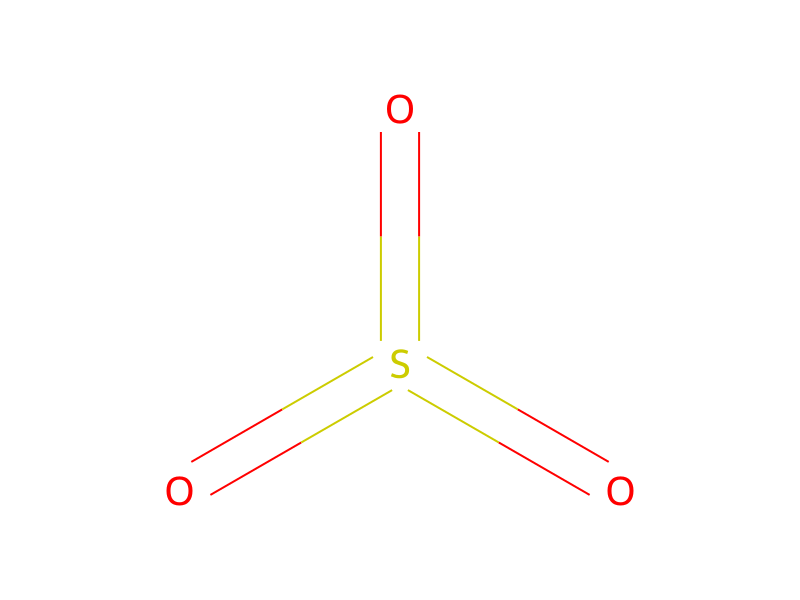

Conditions
- Temperature
- 70 °C
Procedure
A vertical glass tube having a length of 90 cm and a diameter of 4 cm was packed with glass balls and heated at 70° C. 225 g (2.0 moles) of chlorobenzene, 126 g (1.0 mole) of dimethyl sulfate and 160 g (2.0 moles) of sulfur trioxide were simultaneously fed, dropwise, to the top of the tube at approximately the same rates over 30 minutes. Contrary to the procedure adopted in Example 1, the effluent reaction mixture was not immediately precipitated in dilute sulfuric acid but was continuously recycled to the packed column at a pump rate of 2 l/h. Once all of the starting components had been fed to the reactor, recycling was continued at the same rate for a further half-hour, after which the effluent reaction mixture was precipitated in 1 liter of 5% sulfuric acid. Purification was carried out as described in Example 1 to give 261 g (91%) of bis(4-chlorophenyl) sulfone of 97% purity.
Workup
- customA vertical glass tube having
- customthe effluent reaction mixture
- customwas not immediately precipitated in dilute sulfuric acid
- waitwas continued at the same rate for a further half-hour
- customafter which the effluent reaction mixture
- customwas precipitated in 1 liter of 5% sulfuric acid
- customPurification
Sources & evidence
- ORD record
- ord-20ebd6c2f3604a50ad8b71b9343eb847
- Source dataset
- uspto-grants-1992_01
- Patent number
- US05082973
Reaction notes
Loading…