9-Methylacridine → HCID 87061490, compound
Reaction equation

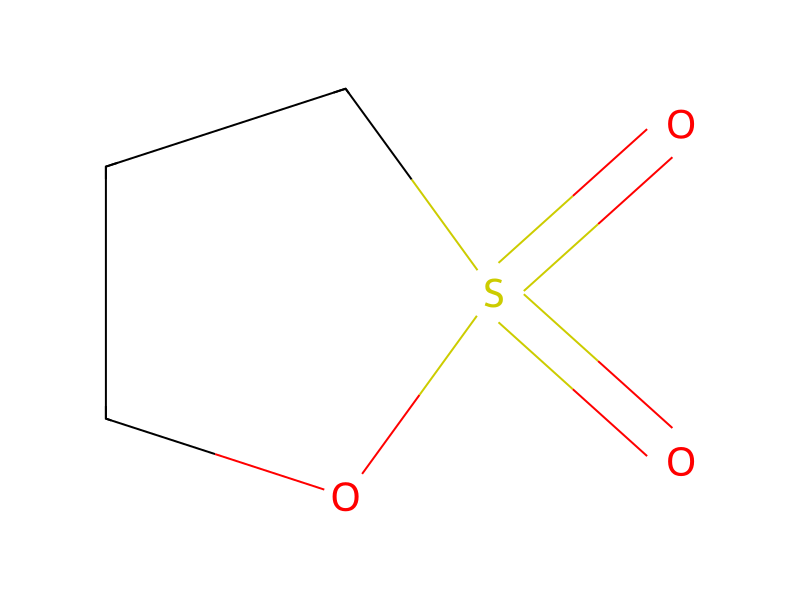
[CH3:1][C:2]1[C:3]2[C:8]([N:9]=[C:10]3[C:15]=1[CH:14]=[CH:13][CH:12]=[CH:11]3)=[CH:7][CH:6]=[CH:5][CH:4]=2.[CH2:16]1[CH2:22][S:19](=[O:21])(=[O:20])[O:18][CH2:17]1>>[OH-:18].[CH3:1][C:2]1[C:15]2[C:10]([N+:9]([CH2:17][CH2:16][CH2:22][S:19]([OH:21])(=[O:20])=[O:18])=[C:8]3[C:3]=1[CH:4]=[CH:5][CH:6]=[CH:7]3)=[CH:11][CH:12]=[CH:13][CH:14]=2Participants


Conditions
- Temperature
- 125 °C
Procedure
This compound was prepared using a method reported in Adamczyk, M.; Chen, Y. Y.; Mattingly, P. G.; Pan, Y.; Rege, S. J. Org. Chem. 1998, 63, 5636. A mixture of 9-methylacridine (270 mg, 1.4 mmol) and 1,3-propane sultone (1.8 g, 14.8 mmol) was stirred in a pressure vessel for 4 h at 125° C. After cooling down, the mixture was purified by column chromatography (SiO2, solvent gradient from 5:95 MeOH/CH2Cl2 to 15:85 MeOH/CH2Cl2) to obtain a mixture of yellow strongly fluorescent fractions. This mixture was concentrated and heated with 37 mL 1N HCl to reflux for 4.5 h. Upon cooling down overnight, the water was evaporated off and the oily residue was purified by column chromatography (SiO2, gradient from CH2Cl2 to 1:9 CH2Cl2/MeOH) to furnish 9-methyl-10-(3-sulfopropyl)acridinium hydroxide inner salt as a yellow solid (202 mg, 46%). 1H NMR (400 MHz, CD3OD): δ 2.60 (m, 2 H), 3.23 (t, J=6.2 Hz, 2 H), 3.56 (s, 3 H), 5.63 (t, J=8.8 Hz, 2 H), 8.01 (m, 2 H), 8.44 (m, 2 step function. This is in vast contrast to di-4-ANEQPTMA and di-4-ANHTQPTMA, where the exponential time constant exceeds 30 ms, making them unusable for electrophysiological applications.
Workup
- customThis compound was prepared
- temperatureAfter cooling down
- customthe mixture was purified by column chromatography (SiO2, solvent gradient from 5:95 MeOH/CH2Cl2 to 15:85 MeOH/CH2Cl2)
- customto obtain
- additiona mixture of yellow strongly fluorescent fractions
- concentrationThis mixture was concentrated
- temperatureheated with 37 mL 1N HCl
- temperatureto reflux for 4.5 h
- temperatureUpon cooling down overnight
- customthe water was evaporated off
- customthe oily residue was purified by column chromatography (SiO2, gradient from CH2Cl2 to 1:9 CH2Cl2/MeOH)
Sources & evidence
- ORD record
- ord-8948c1f93eec450fa8a1096038482a1d
- Source dataset
- uspto-grants-2012_03
- Patent number
- US08129532B2
Reaction notes
Loading…