Water → alpha-Bromo-4-chlorophenylacetic acid
Reaction equation

[Cl:1][C:2]1[CH:7]=[CH:6][C:5]([CH2:8][C:9]([OH:11])=[O:10])=[CH:4][CH:3]=1.[Br:12]Br.O>ClC1C=CC=CC=1>[Br:12][CH:8]([C:5]1[CH:4]=[CH:3][C:2]([Cl:1])=[CH:7][CH:6]=1)[C:9]([OH:11])=[O:10]Participants
Reactant 3

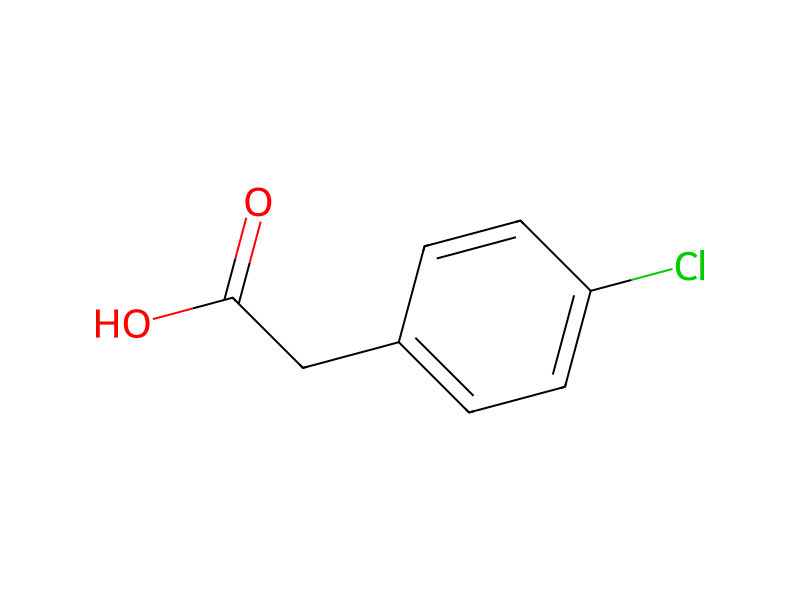

Product 1

Reagents, catalysts & solvents 1

Conditions
- Temperature
- 105 °C
Procedure
In a stirred reactor with reflux condenser (connected to a caustic scrubber) 171 g 4-chlorophenyl acetic acid are pre-charged in 750 g chlorobenzene and 41 g phosphortrichloride (0.3 Mol) are added. The mixture is heated to 100-110° C. and 280 g bromine (1.75 mole) are added within 1 hour through a dropping funnel. The reaction mixture is stirred for another 3-4 hour at 110-115° C. until the conversion of the 4-chlorophenyl acetic acid is complete (control by LC). The reaction mixture is cooled to 50° C. and 100 ml water is added. Excess bromine is destroyed by addition of NaHSO3 solution. The reaction mixture is adjusted to pH 1 with aqueous NaOH solution and then the organic product phase is separated from the aqueous phase. The chlorobenzene phase contains 237 g bromo-(4-chloro-phenyl)acetic acid by LC analysis (yield=95% of theory based on 4-chlorophenylacetic acid). The “bromoacid” bromo-(4-chloro-phenyl)acetic acid can be isolated partly by concentration to a 50% solution and crystallisation/filtration at 0° C. About 200 g of bromo-(4-chloro-phenyl)acetic acid can be isolated in a crystallised form. Melting point=92-93° C. 1H-NMR (CDCl3) δ (ppm): 5.3 (s, 1H); 7.4 (4H, Ar); 9.7 (1H, OH)
Workup
- temperatureIn a stirred reactor with reflux condenser (
- addition41 g phosphortrichloride (0.3 Mol) are added
- temperatureThe reaction mixture is cooled to 50° C.
- customExcess bromine is destroyed by addition of NaHSO3 solution
- customthe organic product phase is separated from the aqueous phase
Sources & evidence
- ORD record
- ord-d969a6164b524744a85a5c2c6768a769
- Source dataset
- uspto-grants-2012_03
- Patent number
- US08129560B2
Reaction notes
Loading…