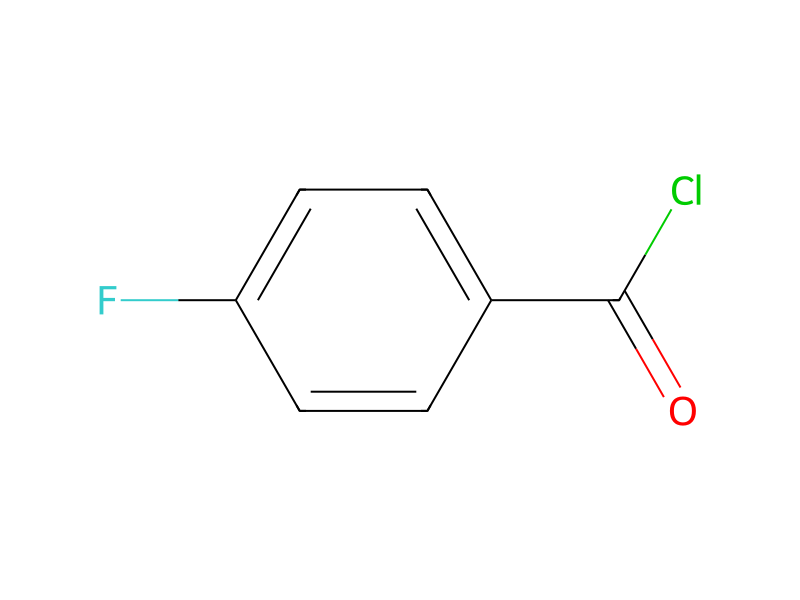
4-Fluorobenzoyl chloride → n-Propyl 3(4-fluorobenzoyl)-2-methyl-1,2,3,6-tetrahydroazepino[4,5-b]indole-5-carboxylate
Reaction equation

[CH2:1]([O:4][C:5]([C:7]1[C:13]2[NH:14][C:15]3[CH:16]=[CH:17][CH:18]=[CH:19][C:20]=3[C:12]=2[CH2:11][CH:10]([CH3:21])[NH:9][CH:8]=1)=[O:6])[CH2:2][CH3:3].[F:22][C:23]1[CH:31]=[CH:30][C:26]([C:27](Cl)=[O:28])=[CH:25][CH:24]=1>>[F:22][C:23]1[CH:31]=[CH:30][C:26]([C:27]([N:9]2[CH:10]([CH3:21])[CH2:11][C:12]3[C:20]4[CH:19]=[CH:18][CH:17]=[CH:16][C:15]=4[NH:14][C:13]=3[C:7]([C:5]([O:4][CH2:1][CH2:2][CH3:3])=[O:6])=[CH:8]2)=[O:28])=[CH:25][CH:24]=1Participants
3


Procedure
The title compound was prepared in a manner similar to that described in Example 2A by using 2-methyl-1,2,3,6-tetrahydroazepino[4,5-b]indole-5-carboxylic acid n-propyl ester (compound in Paragraph A) and 4-fluorobenzoyl chloride; MS (ES): 407 (MH+). The racemic sample was submitted to chiral separation using a 10 mm×250 mm Chiralcel OD column and a 10% iPrOH/hexane isocratic mobile phase to give two isomers.
Workup
- customThe racemic sample was submitted to chiral separation
- customa 10% iPrOH/hexane isocratic mobile phase to give two isomers
Sources & evidence
- ORD record
- ord-183c390936494a8581a3cdd2409085a6
- Source dataset
- uspto-grants-2012_03
- Patent number
- US08133992B2
Reaction notes
Loading…