Propargyl alcohol → 3-(p-Tolyl)propiolaldehyde
Reaction equation

[Cr](Cl)([O-])(=O)=O.[NH+]1C=CC=CC=1.[C:12]1([CH3:22])[CH:17]=[CH:16][C:15]([C:18]#[C:19][CH2:20][OH:21])=[CH:14][CH:13]=1.CCCCCCC.C(OCC)(=O)C.C(O)C#C>ClCCl>[C:12]1([CH3:22])[CH:13]=[CH:14][C:15]([C:18]#[C:19][CH:20]=[O:21])=[CH:16][CH:17]=1Participants
6





Procedure
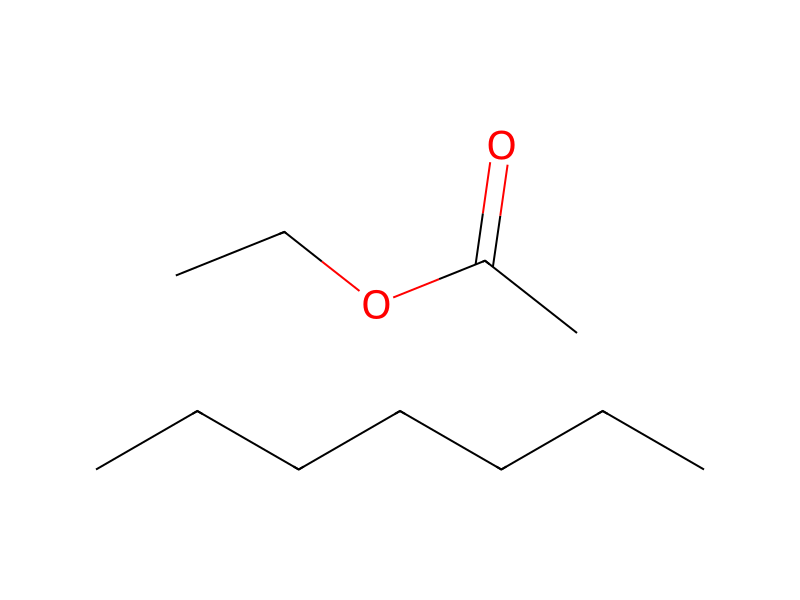
Pyridinium chlorochromate (22.1 g; 102.6 mmol; 2 eq) was added to a stirred solution of 3-p-tolylprop-2-yn-1-ol (7.5 g; 51.3 mmol) in dichloromethane (200 mL) at room temperature under nitrogen. The mixture was stirred for 4 h until TLC (2:1 heptane/ethyl acetate) indicated the disappearance of the starting propargyl alcohol. The mixture was then filtered through a bed of celite, and the filter cake was rinsed with dichloromethane (100 mL). The dichloromethane was concentrated using a rotary evaporator to give the desired product (4.22 g; 29.3 mmol; 57%) which was used in the next step without further purification. 1H NMR (400 MHz, CHLOROFORM-d) δ ppm 2.39 (s, 3 H) 7.20 (d, 2H) 7.50 (d, 2H) 9.41 (s, 1H).
Workup
- filtrationThe mixture was then filtered through a bed of celite
- washthe filter cake was rinsed with dichloromethane (100 mL)
- concentrationThe dichloromethane was concentrated
- customa rotary evaporator
Sources & evidence
- ORD record
- ord-69b66caec9224358ae99618485a8992c
- Source dataset
- uspto-grants-2012_03
- Patent number
- US08138377B2
Reaction notes
Loading…