Phosgene → o-N,N-Diethylsulfamoylbenzenesulfonyl isocyanate
Reaction equation

[CH2:1]([N:3]([CH2:17][CH3:18])[S:4]([C:7]1[C:8]([S:13]([NH2:16])(=[O:15])=[O:14])=[CH:9][CH:10]=[CH:11][CH:12]=1)(=[O:6])=[O:5])[CH3:2].C(N=[C:24]=[O:25])CCC.C(Cl)(Cl)=O>>[CH2:17]([N:3]([CH2:1][CH3:2])[S:4]([C:7]1[CH:12]=[CH:11][CH:10]=[CH:9][C:8]=1[S:13]([N:16]=[C:24]=[O:25])(=[O:14])=[O:15])(=[O:6])=[O:5])[CH3:18]Participants
4

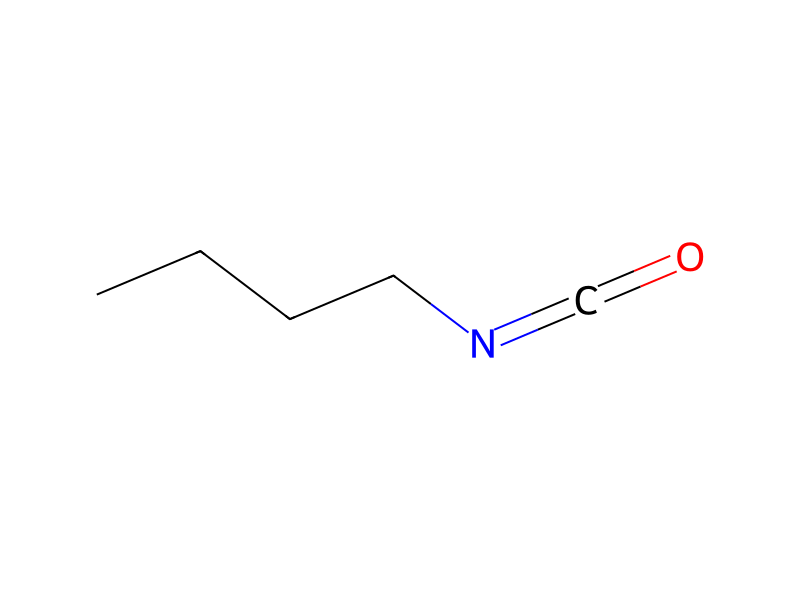


Procedure
A solution of 13.2 g of N,N-diethyl-1,2-benzenedisulfonamide, 4.5 g of n-butylisocyanate, and 0.2 g of 1,4-diaza[2,2,2]bicyclooctane (DABCO) in 90 ml of mixed xylenes was heated to 135°. To this solution ws added 3.3 ml of liquid phosgene at such a rate that the temperature was maintained between 125° and 135° (about 2 hours). The temperature was kept at 130° for 1/2 hour after the addition. The solution was cooled and filtered to remove a small amount of insoluble solid then concentrated at 60°-70° in-vacuo. The residue of o-N,N-diethylsulfamoylbenzenesulfonyl isocyanate was an oil weighing 16.8 g and was sufficiently pure for further reaction.
Workup
- temperaturewas maintained between 125° and 135° (about 2 hours)
- additionafter the addition
- temperatureThe solution was cooled
- filtrationfiltered
- customto remove a small amount of insoluble solid
- concentrationthen concentrated at 60°-70° in-vacuo
- customwas sufficiently pure for further reaction
Sources & evidence
- ORD record
- ord-aecf27d94710465db655b2bba9315655
- Source dataset
- uspto-grants-1982_01
- Patent number
- US04310346
Reaction notes
Loading…