Hexamethylphosphoramide → p-(t-Butyl)benzyl 3-chloro-1-azabicyclo[3.2.0]hept-2-en-7-one-2-carboxylate
Reaction equation

[Cl:1][C:2]1[CH2:8][CH:7]2[N:4]([C:5](=[O:9])[CH2:6]2)[C:3]=1[C:10]([O-:12])=[O:11].[Na+].[C:14]([C:18]1[CH:25]=[CH:24][C:21]([CH2:22]Br)=[CH:20][CH:19]=1)([CH3:17])([CH3:16])[CH3:15].CN(C)P(N(C)C)(N(C)C)=O>C1(C)C=CC=CC=1>[Cl:1][C:2]1[CH2:8][CH:7]2[N:4]([C:5](=[O:9])[CH2:6]2)[C:3]=1[C:10]([O:12][CH2:22][C:21]1[CH:24]=[CH:25][C:18]([C:14]([CH3:17])([CH3:16])[CH3:15])=[CH:19][CH:20]=1)=[O:11]Participants
5
Reactant 3

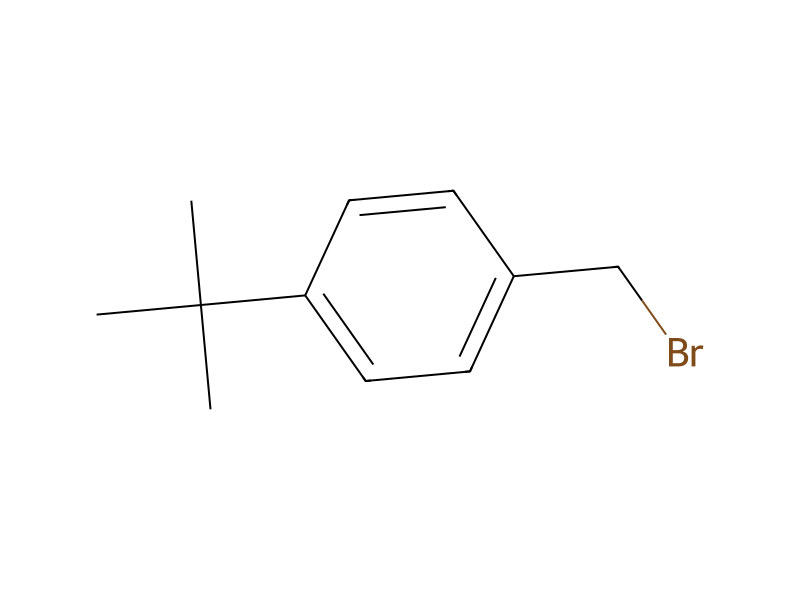

Product 1

Reagents, catalysts & solvents 1

Procedure
A mixture of sodium 3-chloro-1-azabicyclo[3.2.0]hept-2-en-7-one-2-carboxylate (20 mg), p-(t-butyl)benzyl bromide (34 mg), and anhydrous hexamethylphosphoramide (0.4 ml) is stirred under a nitrogen atmosphere at room temperature for 2.5 hrs. The mixture is diluted with toluene (5 ml), washed with water (5×2 ml) and brine, dried with MgSO4, filtered, and concentrated in vacuo. Chromatography of the residue on a silica gel plate yields p-(t-butyl)benzyl 3-chloro-1-azabicyclo[3.2.0]hept-2-en-7-one-2-carboxylate.
Workup
- washwashed with water (5×2 ml) and brine
- dry with materialdried with MgSO4
- filtrationfiltered
- concentrationconcentrated in vacuo
Sources & evidence
- ORD record
- ord-03ab253db4914317bfd20e3850639605
- Source dataset
- uspto-grants-1982_01
- Patent number
- US04310538
Reaction notes
Loading…