Sodium Hydroxide → HCID 20554505, compound
Reaction equation

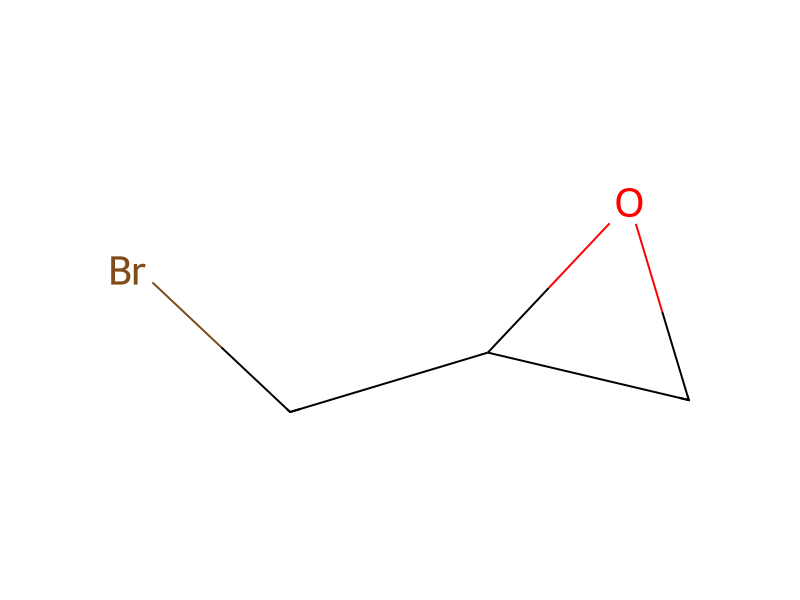
[CH:1]1([CH2:5][S:6][CH2:7][CH2:8][C:9]2[CH:14]=[CH:13][C:12]([OH:15])=[CH:11][CH:10]=2)[CH2:4][CH2:3][CH2:2]1.[OH-].[Na+].[CH2:18]([CH:20]1[O:22][CH2:21]1)Br>O>[CH:1]1([CH2:5][S:6][CH2:7][CH2:8][C:9]2[CH:14]=[CH:13][C:12]([O:15][CH2:18][CH:20]3[O:22][CH2:21]3)=[CH:11][CH:10]=2)[CH2:4][CH2:3][CH2:2]1Participants
Reactant 3


Product 1

Reagents, catalysts & solvents 1

Procedure
13 g (0.058 mol) of p-(2-cyclobutylmethylthioethyl)-phenol suspended in 80 ml of water are introduced into an Erlenmeyer flask placed under nitrogen. The temperature is kept below 20° C. and 2.72 g (0.068 mol) of sodium hydroxide pellets are added. The solution becomes homogeneous. It is stirred for about 30 minutes and 11.92 g (0.087 mol) of epibromohydrin are then added dropwise at ambient temperature. The batch is stirred at ambient temperature for about 4 hours. The solution becomes cloudy. The oily phase is extracted with ether and the ether phase is washed with 2 N sodium hydroxide solution and then with water. The ether is dried over magnesium sulphate and then evaporated. The residue is distilled on a bulb still at a temperature of 160° C. under a pressure of 0.04 mm Hg. 6.2 g (yield: 38.8%) of 1-[4-(2-cyclobutylmethylthio-ethyl)-phenoxy]-2,3-epoxy-propane are obtained, and this material is used directly.
Workup
- additionare introduced into an Erlenmeyer flask
- customis kept below 20° C.
- stirringThe batch is stirred at ambient temperature for about 4 hours
- extractionThe oily phase is extracted with ether
- washthe ether phase is washed with 2 N sodium hydroxide solution
- dry with materialThe ether is dried over magnesium sulphate
- customevaporated
- distillationThe residue is distilled on a bulb still at a temperature of 160° C. under a pressure of 0.04 mm Hg
Sources & evidence
- ORD record
- ord-6df02f4182904833a8709fbc7d2af1f1
- Source dataset
- uspto-grants-1982_01
- Patent number
- US04311708
Reaction notes
Loading…