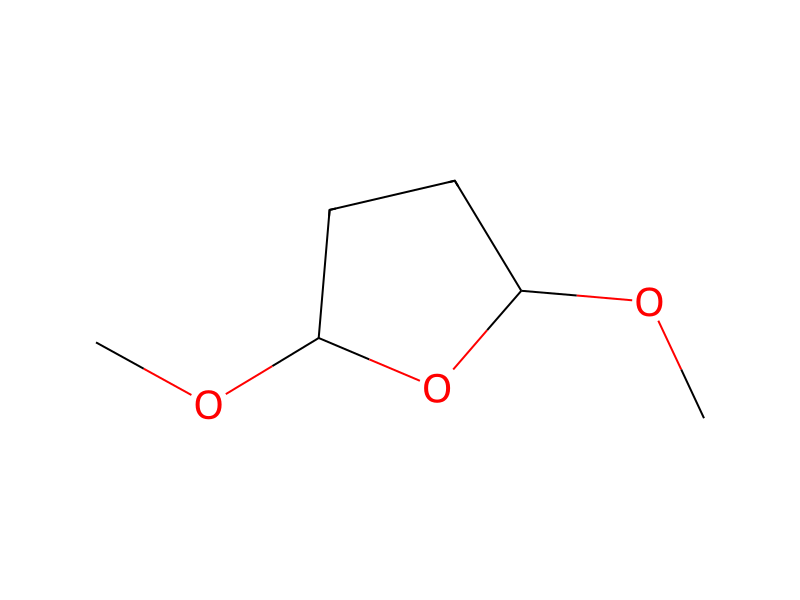
2,5-Dimethoxytetrahydrofuran → HCID 12340622, compound
Reaction equation

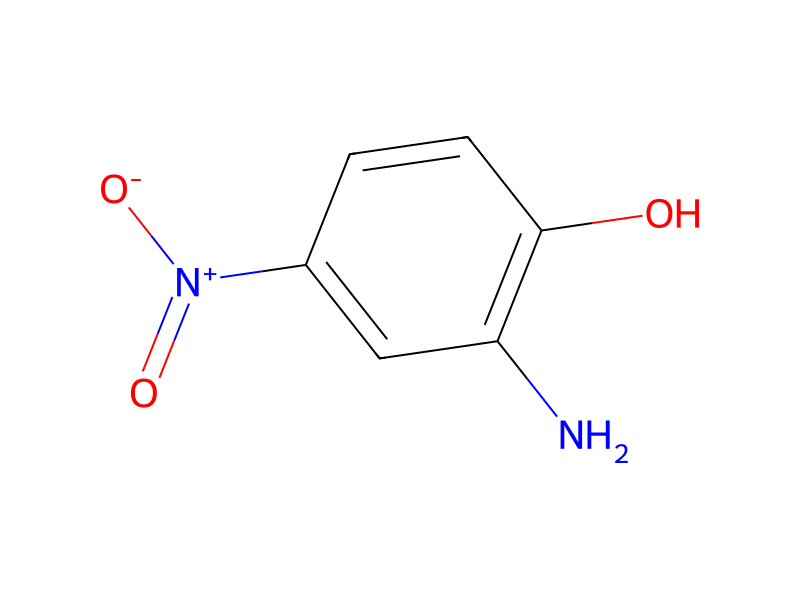
[NH2:1][C:2]1[CH:7]=[C:6]([N+:8]([O-:10])=[O:9])[CH:5]=[CH:4][C:3]=1[OH:11].CO[CH:14]1[CH2:18][CH2:17][CH:16](OC)O1>C(O)(=O)C>[N+:8]([C:6]1[CH:5]=[CH:4][C:3]([OH:11])=[C:2]([N:1]2[CH:14]=[CH:18][CH:17]=[CH:16]2)[CH:7]=1)([O-:10])=[O:9]Participants
Reactant 2
Product 1

Reagents, catalysts & solvents 1

Procedure
2-Amino-4-nitrophenol (5 g, 32.0 mmol) and 2,5-dimethoxytetrahydrofuran (5.03 ml, 38.4 mmol) were dissolved in glacial acetic acid (100 ml), followed by stirring at the reflux temperature for 10 min. After subsequent cooling to room temperature, the solvent was evaporated under vacuum and the residue was neutralized with an aqueous solution of sodium carbonate, followed by three extractions with ethyl acetate. The organic solvent layers were combined, dried with magnesium sulfate and the solvent was evaporated; thereafter, the residue was purified by being subjected to column chromatography on silica gel using a 2:1 solvent system of n-hexane and ethyl acetate as an eluent; the fractions containing the product were collected and the solvent was evaporated to yield the end compound 4-nitro-2-(1H-pyrrol-1-yl)phenol (3.81 g).
Workup
- customthe solvent was evaporated under vacuum
- extractionfollowed by three extractions with ethyl acetate
- dry with materialdried with magnesium sulfate
- customthe solvent was evaporated
- customthereafter, the residue was purified
- additionthe fractions containing the product
- customwere collected
- customthe solvent was evaporated
Sources & evidence
- ORD record
- ord-c584164d96be406ea02e0d6e3f71ea60
- Source dataset
- uspto-grants-2000_05
- Patent number
- US06057358
Reaction notes
Loading…