1,3-Propanediol → 2-(4-Bromophenyl)-2-(1-methylethyl)-1,3-dioxane
Reaction equation

[Br:1][C:2]1[CH:7]=[CH:6][C:5]([C:8](=[O:12])[CH:9]([CH3:11])[CH3:10])=[CH:4][CH:3]=1.[CH2:13](O)[CH2:14][CH2:15][OH:16]>>[Br:1][C:2]1[CH:3]=[CH:4][C:5]([C:8]2([CH:9]([CH3:10])[CH3:11])[O:16][CH2:15][CH2:14][CH2:13][O:12]2)=[CH:6][CH:7]=1Participants
3
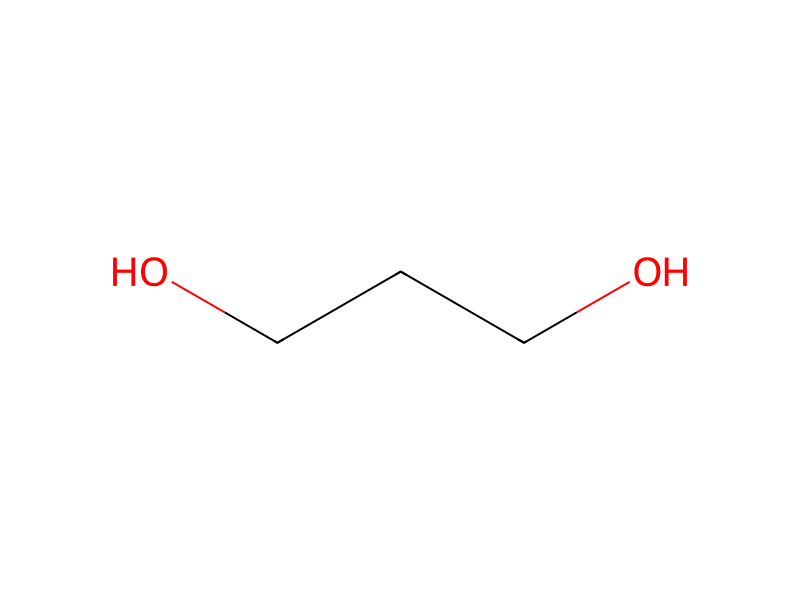


Procedure
Using an analogous procedure to that described in Example 62, part (i), but starting from 1-bromo-4-(2-methylpropanoyl)benzene and 1,3-propanediol there was thus obtained (in 42% yield) 2-(4-bromophenyl)-2-isopropyl-1,3-dioxane (4.25 g), b.p. 116° C. at 0.4 mm Hg 1H NMR (acid free CDCl3): 0.8 (d, 3H), 1.15-1.25 (m, 1H), 1.85 (m, 2H), 2.0-2.1 (m, 1H), 3.68 (d of t, 2H), 3.75-3.85 (m, 2H) 7.15-7.25 (m, 2H), 7.45-7.55 (m, 2H): mass spectrum (CI+) 285 (M+H)+.
Sources & evidence
- ORD record
- ord-665abee406664b978c898ad9d1df6884
- Source dataset
- uspto-grants-2000_05
- Patent number
- US06060475
Reaction notes
Loading…