Hydrochloric Acid → 2-(4-Tert-butylphenyl)-3-(1-methyl-3,5-dichloropyrazol-4-yl)-3-hydroxyacrylonitrile
Reaction equation

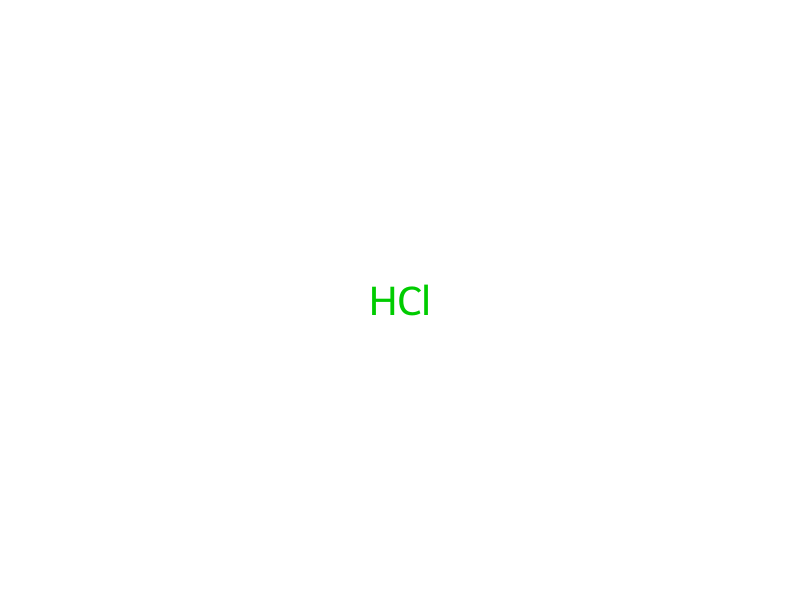
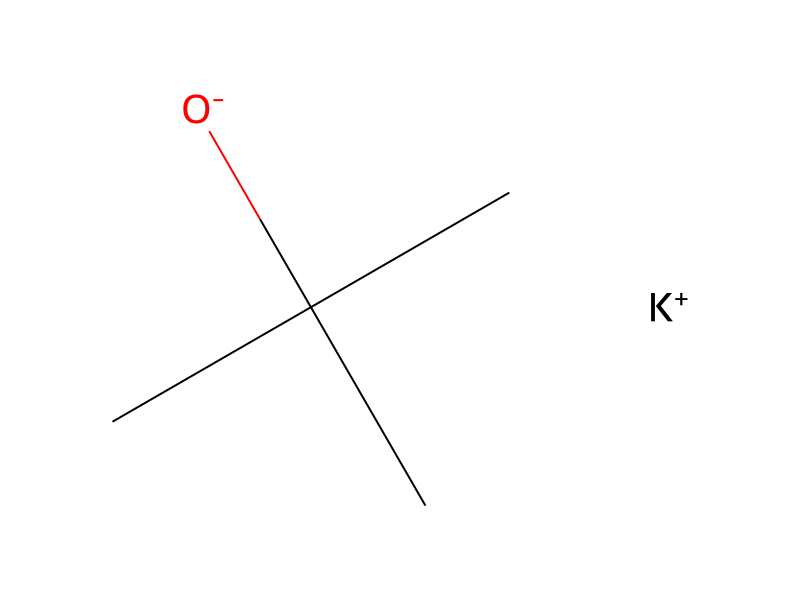
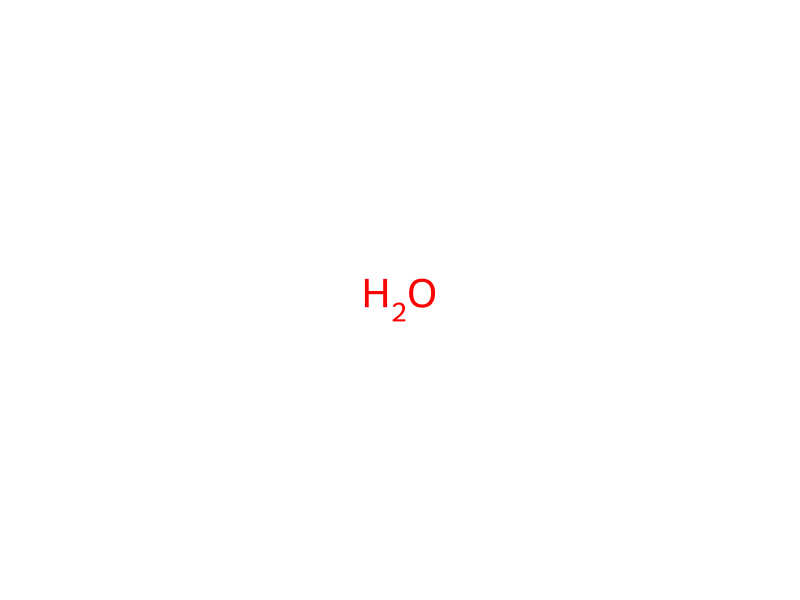
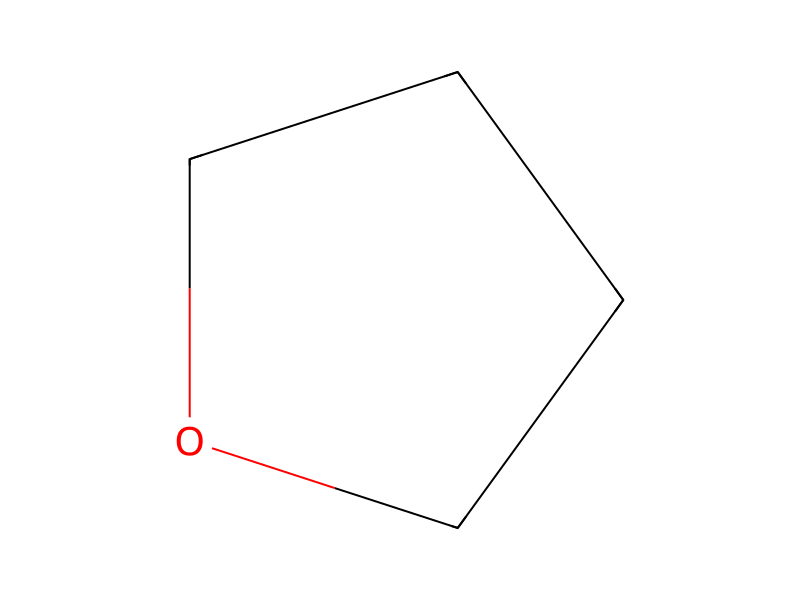
[C:1]([C:5]1[CH:10]=[CH:9][C:8]([CH2:11][C:12]#[N:13])=[CH:7][CH:6]=1)([CH3:4])([CH3:3])[CH3:2].[CH3:14][N:15]1[C:19]([Cl:20])=[C:18]([C:21](Cl)=[O:22])[C:17]([Cl:24])=[N:16]1.CC(C)([O-])C.[K+].Cl>C1COCC1.O>[C:1]([C:5]1[CH:6]=[CH:7][C:8]([C:11](=[C:21]([C:18]2[C:17]([Cl:24])=[N:16][N:15]([CH3:14])[C:19]=2[Cl:20])[OH:22])[C:12]#[N:13])=[CH:9][CH:10]=1)([CH3:4])([CH3:2])[CH3:3]Participants
Reactant 4


Product 1

Reagents, catalysts & solvents 2
Procedure
1.00 g of 4-tert-butylphenylacetonitrile and 1.23 g of 1-methyl-3,5-dichloropyrazole-4-carbonyl chloride were dissolved in 20 ml of THF, and 1.01 g of potassium t-butoxide was added thereto with cooling with ice. After the resulting mixture was stirred overnight at room temperature, water was added thereto, acidified with diluted hydrochloric acid, and extracted with ethyl acetate. The organic layer was washed with water, and dried with sodium sulfate, and the solvent was distilled off under reduced pressure. The residual product was dissolved in a mixed solvent of 10 ml of water and 10 ml of dioxane, and 0.38 g of potassium hydroxide was added thereto and heated under reflux for 4 hours. After having been left to be at room temperature, this was acidified with diluted hydrochloric acid, and extracted with ethyl acetate. The organic layer was washed with water, and dried over sodium sulfate, and the solvent was distilled off under reduced pressure. The residual product was purified through silica gel column chromatography to obtain 0.64 g of 2-(4-tert-butylphenyl)-3-(l-methyl-3,5-dichloropyrazol-4-yl)-3-hydroxyacrylonitrile from the fraction eluted with n-hexane:ethyl acetate=2:1.
Workup
- temperaturewith cooling with ice
- extractionextracted with ethyl acetate
- washThe organic layer was washed with water
- dry with materialdried with sodium sulfate
- distillationthe solvent was distilled off under reduced pressure
- dissolutionThe residual product was dissolved in a mixed solvent of 10 ml of water and 10 ml of dioxane, and 0.38 g of potassium hydroxide
- additionwas added
- temperatureheated
- temperatureunder reflux for 4 hours
- waitAfter having been left
- customto be at room temperature
- extractionextracted with ethyl acetate
- washThe organic layer was washed with water
- dry with materialdried over sodium sulfate
- distillationthe solvent was distilled off under reduced pressure
- customThe residual product was purified through silica gel column chromatography
Sources & evidence
- ORD record
- ord-8b24026f97444eb2bac60272a501f15a
- Source dataset
- uspto-grants-2000_05
- Patent number
- US06063734
Reaction notes
Loading…