Dichloromethane → 7-Amino-1-(2,3,5-tri-O-benzoyl-beta-D-ribofuranosyl)-1,3-aza-phospholo[4,5-d]pyrimidine
Reaction equation

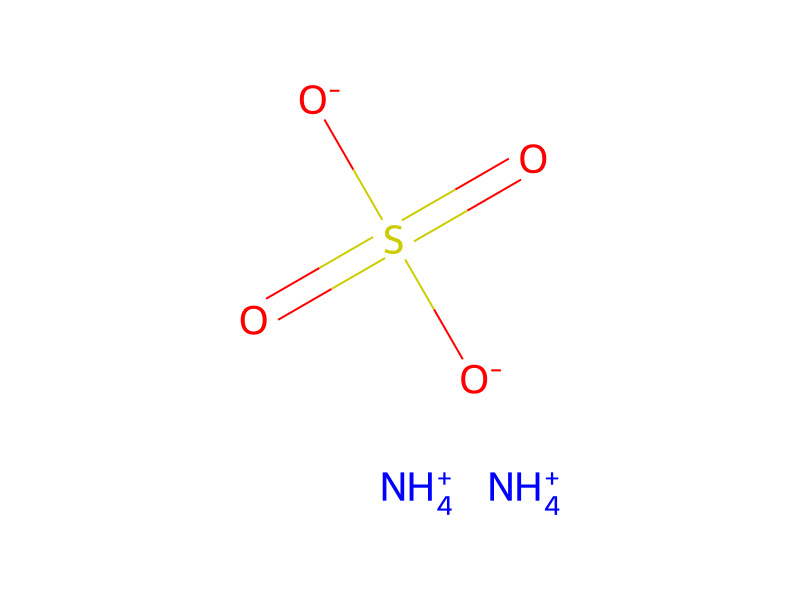
[NH2:1][C:2]1[C:3]2[NH:10][CH:9]=[P:8][C:4]=2[N:5]=[CH:6][N:7]=1.S([O-])([O-])(=O)=O.[NH4+].[NH4+].C(O[CH:22]1[O:44][C@H:43]([CH2:45][O:46][C:47](=[O:54])[C:48]2[CH:53]=[CH:52][CH:51]=[CH:50][CH:49]=2)[C@@H:33]([O:34][C:35](=[O:42])[C:36]2[CH:41]=[CH:40][CH:39]=[CH:38][CH:37]=2)[C@H:23]1[O:24][C:25](=[O:32])[C:26]1[CH:31]=[CH:30][CH:29]=[CH:28][CH:27]=1)(=O)C.Cl[Sn](Cl)(Cl)Cl.ClCCl>C[Si](C)(C)N[Si](C)(C)C.N1C=CC=CC=1.ClCCCl>[NH2:1][C:2]1[C:3]2[N:10]([C@@H:22]3[O:44][C@H:43]([CH2:45][O:46][C:47](=[O:54])[C:48]4[CH:53]=[CH:52][CH:51]=[CH:50][CH:49]=4)[C@@H:33]([O:34][C:35](=[O:42])[C:36]4[CH:41]=[CH:40][CH:39]=[CH:38][CH:37]=4)[C@H:23]3[O:24][C:25](=[O:32])[C:26]3[CH:27]=[CH:28][CH:29]=[CH:30][CH:31]=3)[CH:9]=[P:8][C:4]=2[N:5]=[CH:6][N:7]=1Participants
Reactant 5




Product 1

Reagents, catalysts & solvents 3



Procedure
A mixture of 7-amino-1H-1,3-azaphospholo[4,5-d]pyrimidine (compound 10, 0.3 g, 1.97 mmol) in 1,1,1,3,3,3-hexamethyldisilazane (HMDS, 5 mL), pyridine (5 mL) and ammonium sulfate (50 mg) was heated under reflux for 18 h. The reaction mixture was allowed to cool to room temperature and the excess of HMDS and pyridine were evaporated in vacuo. The silyl derivative of compound 10 was dried under high vacuum for 3 h. The dried material was dissolved in 1,2-dichloroethane (30 mL) to which 1-O-acetyl-2,3,5-tri-O-benzoyl-D-ribofuranose (1.28 g, 2.4 mmol) was added. The mixture was cooled in an ice bath. A solution of SnCl4 in dichloromethane (1 M, 2.8 mL, 2.8 mmol) was added keeping the flask under an argon atmosphere. After stirring the mixture in the ice bath for 4 h, the ice bath was removed and the reaction was continued at ambient temperature for 18 h. Methanol (10 mL) was added and after 10 min it was diluted with dichloromethane (100 mLL). The organic layer was washed with saturated sodium hydrogen carbonate solution (50 mL) and the resultant emulsion was filtered through a Celite pad. Organic layer was separated and the aqueous layer was extracted with dichloromethane (2×50 mL). The combined organic layer was dried (Na2SO4) and evaporated. The solid thus obtained was crystallized from a mixture of ethyl acetate and methanol to give 0.65 g (56%) of the title compound, mp 248-250° C. (dec). 1H nmr (DMSO-d6): δ 4.85(m,2 t C5H2), 4.96 (m, 1 H, C4'H), 6.01 (m, 1 H, C3'H), 6.19 (m, 1 H, C2'H), 6.51 (d, 1 H, C1'H), 7.44-8.05 (m, 15 H, 3Bz), 8.44 and 8.47 (2s, 2 H, NH2), 8.75 (d, 1 H, C5H), and 8.95 (d, 1 H, J =57 Hz, C2H). Anal. Calcd. for C31H25N4O7P.0.5 H2O: C, 61.49; H, 4.33; N, 9.25. Found: C, 61.61; H, 3.88; N, 9.21.
Workup
- temperaturewas heated
- temperatureunder reflux for 18 h
- customthe excess of HMDS and pyridine were evaporated in vacuo
- dry with materialThe silyl derivative of compound 10 was dried under high vacuum for 3 h
- additionwas added
- temperatureThe mixture was cooled in an ice bath
- customthe ice bath was removed
- additionMethanol (10 mL) was added and after 10 min it
- additionwas diluted with dichloromethane (100 mLL)
- washThe organic layer was washed with saturated sodium hydrogen carbonate solution (50 mL)
- filtrationthe resultant emulsion was filtered through a Celite pad
- customOrganic layer was separated
- extractionthe aqueous layer was extracted with dichloromethane (2×50 mL)
- dry with materialThe combined organic layer was dried (Na2SO4)
- customevaporated
- customThe solid thus obtained
- customwas crystallized from a mixture of ethyl acetate and methanol
Sources & evidence
- ORD record
- ord-f8f0f24ba36c48299ede36032093ac7e
- Source dataset
- uspto-grants-2000_05
- Patent number
- US06069132
Reaction notes
Loading…