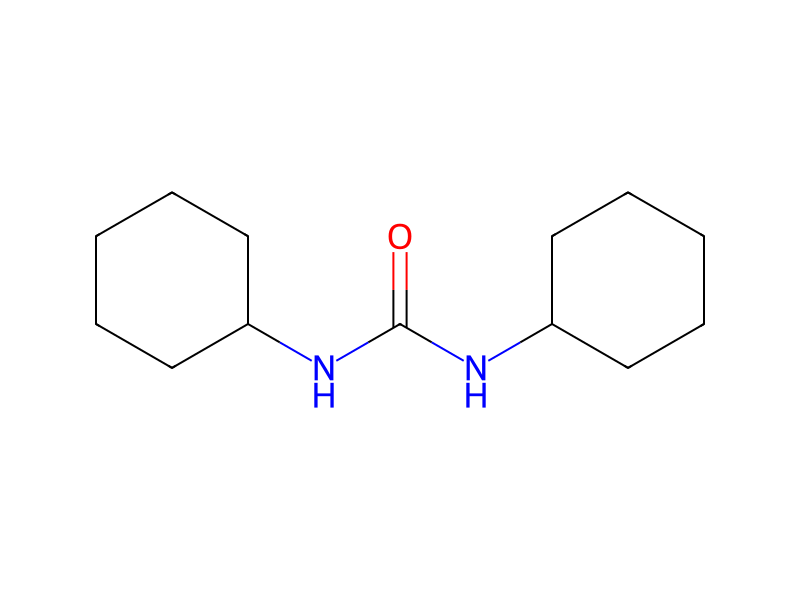
N,N'-Dicyclohexylurea → HCID 178501393, compound
Reaction equation

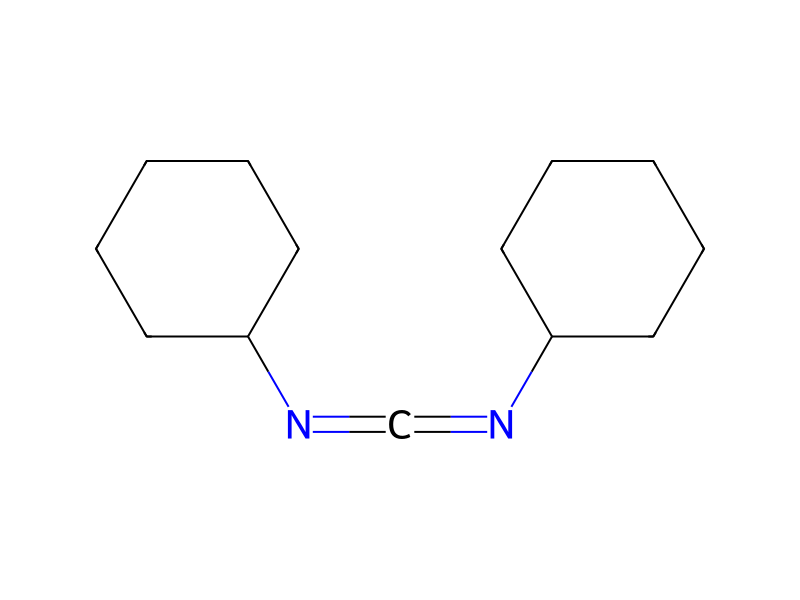
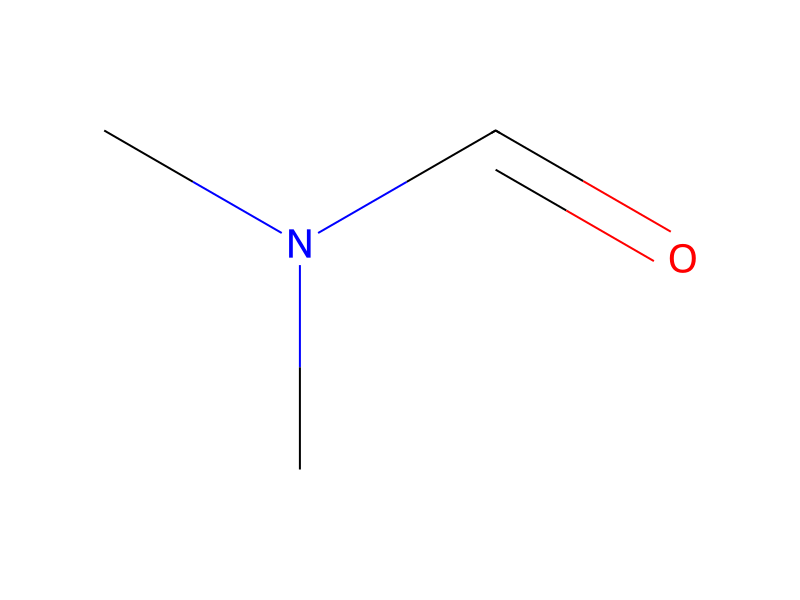
C1(N=C=NC2CCCCC2)CCCCC1.[CH2:16]([O:23][C:24]([NH:26][C@H:27]([C:34]([OH:36])=O)[CH2:28][C:29]1[N:33]=[CH:32][NH:31][CH:30]=1)=[O:25])[C:17]1[CH:22]=[CH:21][CH:20]=[CH:19][CH:18]=1.ON1C(=O)CCC1=O.Cl.[CH3:46][O:47][C:48](=[O:61])[C@@H:49]([CH2:51][C:52]1[C:60]2[C:55](=[CH:56][CH:57]=[CH:58][CH:59]=2)[NH:54][CH:53]=1)[NH2:50].C(NC1CCCCC1)(NC1CCCCC1)=O>CN(C=O)C>[CH3:46][O:47][C:48](=[O:61])[C@@H:49]([CH2:51][C:52]1[C:60]2[C:55](=[CH:56][CH:57]=[CH:58][CH:59]=2)[NH:54][CH:53]=1)[NH:50][C:34](=[O:36])[C@H:27]([CH2:28][C:29]1[N:33]=[CH:32][NH:31][CH:30]=1)[NH:26][C:24]([O:23][CH2:16][C:17]1[CH:18]=[CH:19][CH:20]=[CH:21][CH:22]=1)=[O:25]Participants
Reactant 5


Product 1

Reagents, catalysts & solvents 1
Procedure
Dicyclohexylcarbodiimide (DCC, ca. 95 g, 0.46 mol) was added to a -5° C. (ice-ethanol bath) solution of Nα -benzyloxycarbonyl-histidine (19, 143.5 g, 0.50 mol), N-hydroxysuccinimide (HOSU, 23, 77.5 g, 0.62 mol) and the freshly prepared free base form of 22 (114.5 g, ca. 0.52 mol) in DMF (ca. 3L). The resulting reaction solution was allowed to stir for 24 hours while warming to room temperature. HPLC analysis at this point showed the reaction to be incomplete. The reaction solution was then cooled to ca. -5° C. and an additional portion of dicyclohexylcarbodiimide (ca. 35 g, ca. 0.17 mol) was added to the reaction. The reaction mixture was then allowed to stir for an additional 24 hours while warming to room temperature. The mixture was then filtered to remove dicyclohexylurea (DCU). Water (1 L) was added to the filtrate and the resulting solution was concentrated in vacuo. The resulting residue was taken up in aqueous 1N HCl (ca. 1 L until the pH of the aqueous phase reached a pH of 1). The aqueous phase was then extracted with two portions of ethyl acetate (1 L each). The pH of the aqueous phase was then adjusted by addition of cold 2 N sodium hydroxide (500 mL) and sodium hydroxide pellets. During this neutralization, the solution was kept cold by addition of cold ethyl acetate (1 L). When the pH of the aqueous phase had reached 7, copious precipitation of a white solid resulted. This solid was collected by vacuum filtration and washed sequentially with half saturated sodium carbonate (2×1500 mL), water (6×1500 mL) and ethyl acetate (3×1500 mL). The resulting filter cake was dried under high vacuum to constant weight. The 1H NMR spectrum of this material (187.1 g, ca. 0.38 mol, ca. 77%) was consistent with a product containing 25 as a single isomer in the presence of small amounts of dicyclohexylurea. This material was hydrolyzed directly without further purification.
Workup
- customThe resulting reaction solution
- customthe reaction
- temperatureThe reaction solution was then cooled to ca. -5° C.
- stirringto stir for an additional 24 hours
- temperaturewhile warming to room temperature
- filtrationThe mixture was then filtered
- customto remove dicyclohexylurea (DCU)
- additionWater (1 L) was added to the filtrate
- concentrationthe resulting solution was concentrated in vacuo
- extractionThe aqueous phase was then extracted with two portions of ethyl acetate (1 L each)
- additionThe pH of the aqueous phase was then adjusted by addition of cold 2 N sodium hydroxide (500 mL) and sodium hydroxide pellets
- additionDuring this neutralization, the solution was kept cold by addition of cold ethyl acetate (1 L)
- customprecipitation of a white solid
- customresulted
- filtrationThis solid was collected by vacuum filtration
- washwashed sequentially with half saturated sodium carbonate (2×1500 mL), water (6×1500 mL) and ethyl acetate (3×1500 mL)
- filtrationThe resulting filter cake
- customwas dried under high vacuum to constant weight
- customThis material was hydrolyzed directly without further purification
Sources & evidence
- ORD record
- ord-23c2187bb5804cb5b81d8efad7e5eabf
- Source dataset
- uspto-grants-1994_06
- Patent number
- US05322931
Reaction notes
Loading…