Dimethylamine → Phenol, 4-[(dimethylamino)methyl]-2,6-bis(1,1-dimethylethyl)-
Reaction equation

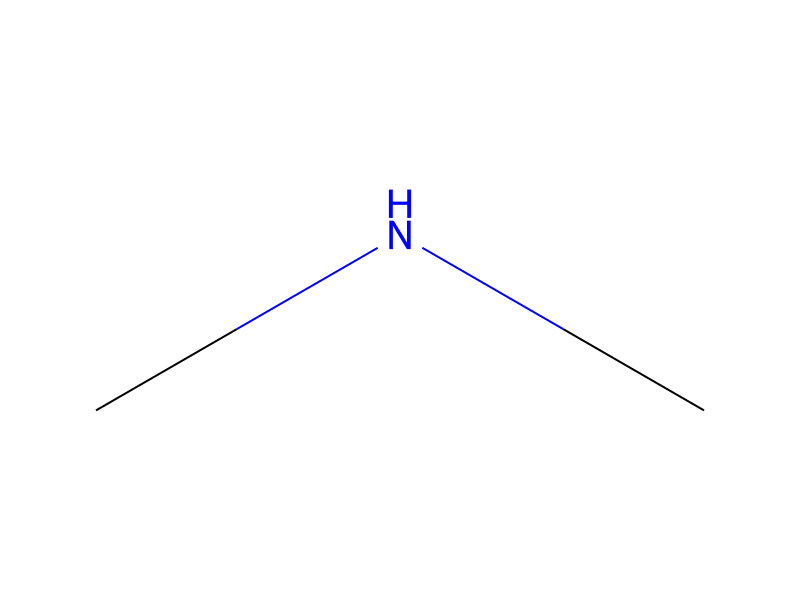
[C:1]([C:5]1[CH:10]=[C:9]([CH3:11])[CH:8]=[C:7]([C:12]([CH3:15])([CH3:14])[CH3:13])[C:6]=1[OH:16])([CH3:4])([CH3:3])[CH3:2].C=O.[CH3:19][NH:20][CH3:21]>>[CH3:19][N:20]([CH2:11][C:9]1[CH:10]=[C:5]([C:1]([CH3:4])([CH3:3])[CH3:2])[C:6]([OH:16])=[C:7]([C:12]([CH3:15])([CH3:14])[CH3:13])[CH:8]=1)[CH3:21]Participants
4



Procedure
Upon intermixing of 2,6-di-tert.butyl-4-methylphenol, formaldehyde and dimethylamine in an alcoholic medium at a temperature within the range of from 80° to 90° C. a condensation reaction occurs resulting in the formation of N,N-dimethyl-3,5-di-tert.butyl-4-hydroxybenzylamine. Along with the latter, formed are readily-volatile reaction products, i.e., water and bis-amine. In addition, alcohol is contained in the reaction mass. The thus-selected temperature range is optimal. When temperature is decreased below the lower limit, the reaction rate of condensation is substantially reduced. Upon increasing temperature above 90° C., decomposition of the Mannich base is observed.
Sources & evidence
- ORD record
- ord-d9efeebd527e4cf6ad4858fa93e120e8
- Source dataset
- uspto-grants-1978_10
- Patent number
- US04122287
Reaction notes
Loading…