Isopropylamine → phenyl N-isopropylcarbamate
Reaction equation

[CH:1]([NH2:4])([CH3:3])[CH3:2].Cl[C:6]([O:8][C:9]1[CH:14]=[CH:13][CH:12]=[CH:11][CH:10]=1)=[O:7].[OH-].[Na+]>C(Cl)Cl>[CH:1]([NH:4][C:6](=[O:7])[O:8][C:9]1[CH:14]=[CH:13][CH:12]=[CH:11][CH:10]=1)([CH3:3])[CH3:2]Participants
5
Reactant 3


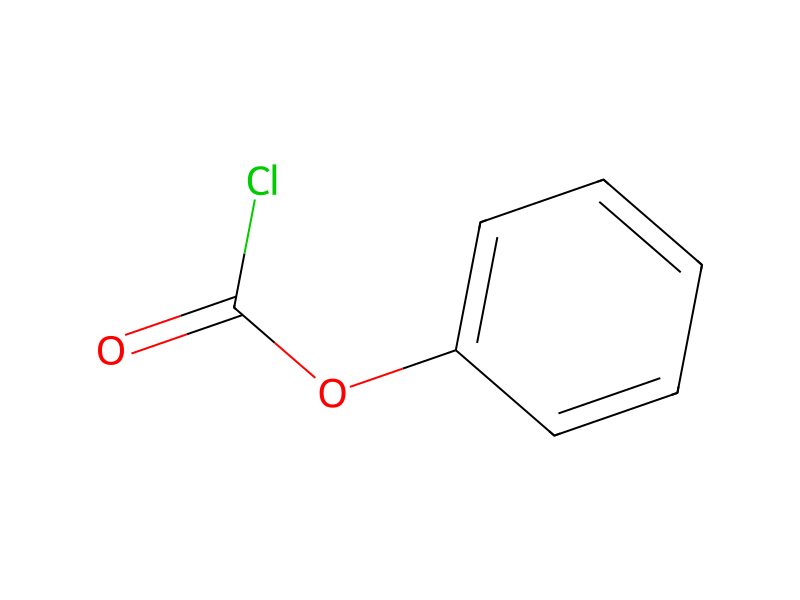
Product 1

Reagents, catalysts & solvents 1

Procedure
Using the same procedure as in Example 4, isopropylamine (2.36g, 0.04 mole) was reacted with phenyl chloroformate (6.0g, 0.038 mole) in methylene chloride (35 ml) and with aqueous sodium hydroxide. The reaction mixture was stirred for two hours, then allowed to separate. The organic layer was dried over anhydrous magnesium sulfate, then gravity filtered. The filtrate was stripped of solvent on the Rotovap, leaving pure white crystals weighing 6.66g, MP 81°-82° C.
Workup
- customto separate
- dry with materialThe organic layer was dried over anhydrous magnesium sulfate
- filtrationgravity filtered
- customleaving pure white crystals
Sources & evidence
- ORD record
- ord-5846d3de58b642efa883350bc09d94be
- Source dataset
- uspto-grants-1978_10
- Patent number
- US04123450
Reaction notes
Loading…