Styrene → 1-Chloro-4-(2-phenylethenyl)benzene
Reaction equation

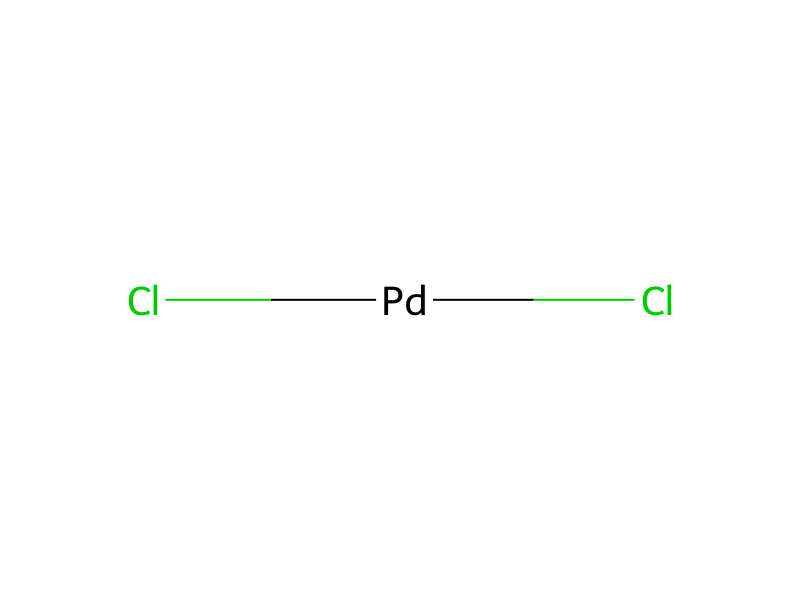
[Cl:1][C:2]1[CH:10]=[CH:9][C:5]([C:6](Cl)=O)=[CH:4][CH:3]=1.C=[CH:12][C:13]1[CH:18]=[CH:17][CH:16]=[CH:15][CH:14]=1>[Pd](Cl)Cl>[Cl:1][C:2]1[CH:10]=[CH:9][C:5]([CH:6]=[CH:12][C:13]2[CH:18]=[CH:17][CH:16]=[CH:15][CH:14]=2)=[CH:4][CH:3]=1Participants
4
Reactant 2


Product 1

Reagents, catalysts & solvents 1
Procedure
The procedure described in Example 1 is followed, except that 17.5 g (0.1 mol) of 4-chlorobenzoyl chloride, 13.02 g (0.125 mol) of styrene, 35.37 g (0.1 mol) of tri-2-ethylhexylamine and 0.1773 g (0.01 mol) of palladium chloride are used. After a reaction time of 4 hours at 120° C., 9.3 g (0.0433 mol) of 4-chlorostilbene, corresponding to a yield of 43.3% of theory, are obtained in the form of white flakes; melting point 129°-130° C.
Sources & evidence
- ORD record
- ord-f7676bf82f5f4da09f399f07b190833e
- Source dataset
- uspto-grants-1982_06
- Patent number
- US04335055
Reaction notes
Loading…