Acetic Acid → HCID 367965, compound
Reaction equation

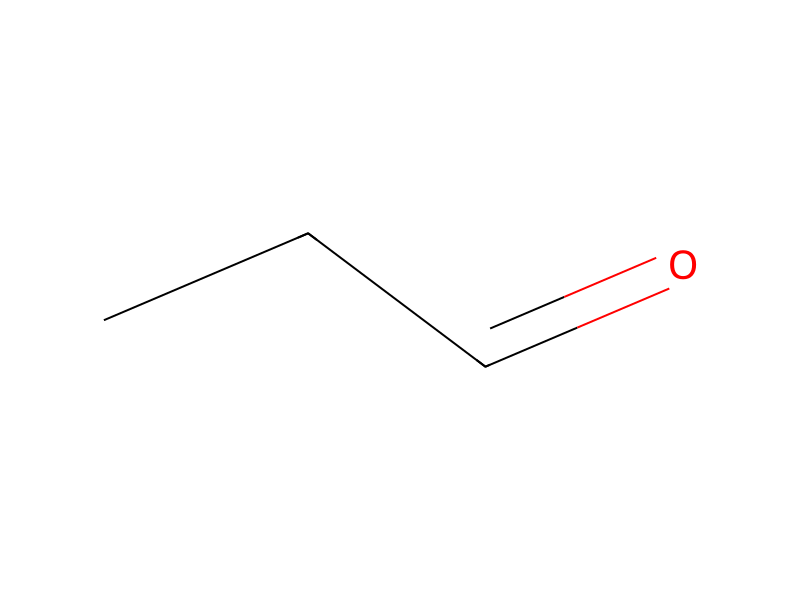
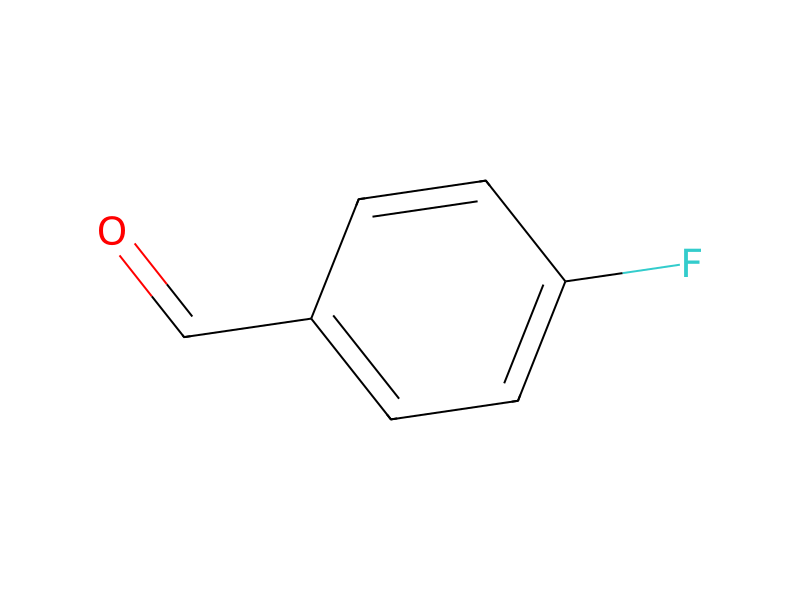
[F:1][C:2]1[CH:9]=[CH:8][C:5]([CH:6]=O)=[CH:4][CH:3]=1.[OH-].[K+].[CH:12](=[O:15])[CH2:13][CH3:14].C(O)(=O)C>C(O)C>[F:1][C:2]1[CH:9]=[CH:8][C:5]([CH:6]=[C:13]([CH3:14])[CH:12]=[O:15])=[CH:4][CH:3]=1Participants
6
Reactant 4


Product 1

Reagents, catalysts & solvents 1

Procedure
To a solution of 124 g (1 mole) of 4-fluorobenzaldehyde and 8 g (0.143 mole) of potassium hydroxide in 500 ml ethanol at room temperature was added dropwise a solution of 52.2 g (0.9 mole) of propionaldehyde in 100 ml ethanol. After stirring for 0.5 hour, the mixture was acidified with acetic acid and concentrated by rotary evaporation. The residue was partitioned between methylene chloride and water. The aqueous layer was extracted three times with additional methylene chloride. The combined organic layers were dried and concentrated. Distillation through a 12-inch vacuum jacketed column gave 113.5 g (77%) of pale yellow low-melting crystalline product, b.p. 70°-72° C. (0.4-0.7 mm).
Workup
- concentrationconcentrated by rotary evaporation
- customThe residue was partitioned between methylene chloride and water
- extractionThe aqueous layer was extracted three times with additional methylene chloride
- customThe combined organic layers were dried
- concentrationconcentrated
- distillationDistillation through a 12-inch vacuum
Sources & evidence
- ORD record
- ord-7a4df3eb373f4bd6a5de9f17a0250a50
- Source dataset
- uspto-grants-1982_06
- Patent number
- US04335136
Reaction notes
Loading…