1-Butanol → 4-(4-Amino-phenyl)-1-methyl-1H-pyrazolo[3,4-c]pyridin-3-ylamine
Reaction equation

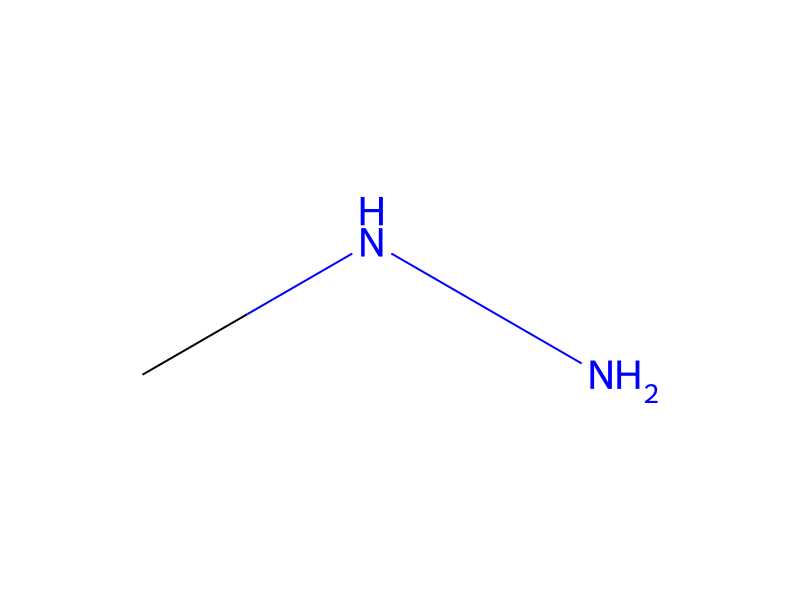
[NH2:1][C:2]1[CH:7]=[CH:6][C:5]([C:8]2[CH:15]=[N:14][CH:13]=C(Cl)[C:9]=2[C:10]#[N:11])=[CH:4][CH:3]=1.[CH3:17][NH:18][NH2:19].[CH2:20](O)CCC>>[NH2:1][C:2]1[CH:3]=[CH:4][C:5]([C:8]2[CH:15]=[N:14][CH:13]=[C:17]3[N:18]([CH3:20])[N:19]=[C:10]([NH2:11])[C:9]=23)=[CH:6][CH:7]=1Participants
4



Procedure
The product from Example 1C (150 mg, 0.65 mmol) and methylhydrazine (0.35 mL) in n-butanol (2 mL) was heated in a sealed vial at 190° C. for 30 minutes with stirring in a Smith Synthesizer microwave oven (at 300W). The reaction mixture was allowed to cool to room temperature and partitioned between water and ethyl acetate. The organic extract was dried (Na2SO4), filtered, and the filtrate was concentrated to provide 0.08 g of the title compound. MS (ESI(+)) m/e 240 (M+H)+.
Workup
- custompartitioned between water and ethyl acetate
- extractionThe organic extract
- dry with materialwas dried (Na2SO4)
- filtrationfiltered
- concentrationthe filtrate was concentrated
Sources & evidence
- ORD record
- ord-dd4d95861b45473a84a5f97180212f45
- Source dataset
- uspto-grants-2010_10
- Patent number
- US07812166B2
Reaction notes
Loading…