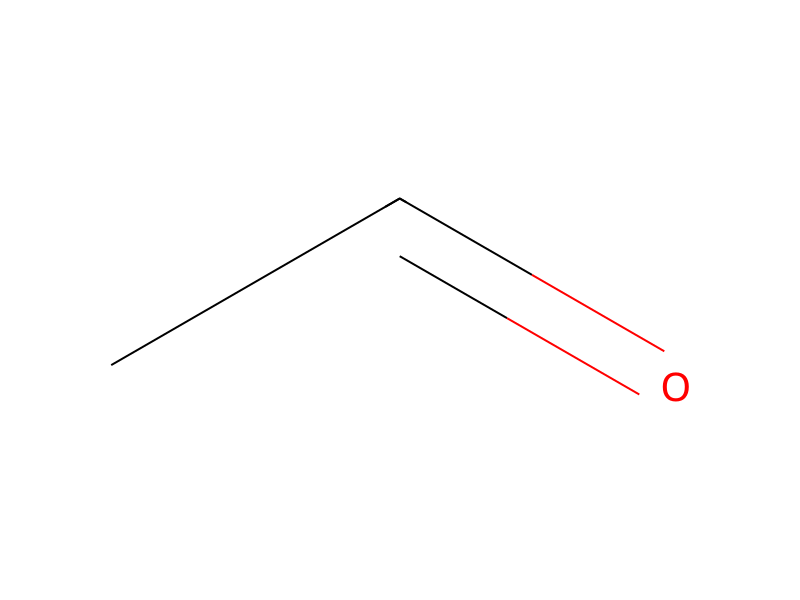
Acetaldehyde → Naphthalene
Reaction equation

[OH-].[CH:2]1[C:11]2[C:6](=[CH:7][CH:8]=[CH:9][CH:10]=2)[CH:5]=[CH:4][CH:3]=1.C(=O)C>>[CH:10]1[C:11]2[C:6](=[CH:5][CH:4]=[CH:3][CH:2]=2)[CH:7]=[CH:8][CH:9]=1Participants


Procedure
The naphthalene resin having the structural unit represented by formula (1) or (2) is an oligomer or a polymer in which the repeating unit n is 2 to 7000, or 2 to 5000, or 2 to 300. The molecular weight thereof varies depending on the application solvent used, solution viscosity, film shape or the like, but ranges from 400 to 1000000, preferably 500 to 500000, further preferably 500 to 300000 in weight average molecular weight. The naphthalene resin having the structural unit represented by formula (1) or (2) has substituent (A). That is, the resin is a naphthalene novolak resin having side chain (A) having an aromatic ring or a hetero-aromatic ring at the end. In addition, the structural unit of formula (1) can have substituent (R1) consisting of hydroxy group, C1-4alkyl group, C1-4alkoxy group and a halogen group such as bromine atom, the number m1 of substituent A on the naphthalene ring is 1 to 6, and the number m2 of substituent (R1) is 0 to 5, the total number of substituent A and substituent (R1) per naphthalene ring is 1 to 6 (m1+m2=1 to 6), and in cases where the total number is an integer other than 6, the reminder is hydrogen atom. The compound of formula (3) is a specific polymer among those of formula (1). In formula (3), X in substituent (A) is a single bond, methylene group, C2-10alkylene group, a divalent hydrocarbon group having C2-10ether bond, or carbonyl group, Z is a linking group of —O— or —OC(═O—, Ar2 is an unsubstituted aromatic ring or an aromatic ring substituted with carboxylic acid, a carboxylic acid ester group, hydroxy group, an alkyl group, an alkoxy group, sulfonic acid group, a halogen group, thiol group, amino group, or amide group. The aromatic ring (Ar2) includes benzene ring, naphthalene ring, anthracene ring, or heterocyclic ring thereof containing hetero atom such as nitrogen atom or the like. The unit of formula (1) includes further the resin of formula (2) having a novolak structure of a naphthalene derivative with other aromatic compound. In formula (2), the other aromatic compound (Ar1) constituting a novolak structure with a naphthalene derivative includes for example benzene, naphthalene, anthracene, or derivative thereof containing hetero atom such as nitrogen atom or the like, or derivative thereof obtained by substituting the above-mentioned compound with carboxylic acid, a carboxylic acid ester group, hydroxy group, an alkyl group, an alkoxy group, sulfonic acid group, a halogen group, thiol group, amino group, or amide group. Among them, the compound corresponding to formula (5) in which (Ar1) is benzene is preferable. The compound of formulae (1) and (2) can be produced by subjecting naphthalene hydroxide and acetaldehyde to condensation polymerization to produce a naphthalene resin, reacting the naphthalene resin with epichlorohydrin to produce a naphthalene resin having glycidyl ether group, and reacting the resulting naphthalene resin with carboxylic acid or hydroxide of benzene, naphthalene or anthracene. Both ends of the compounds of formulae (1) and (2), the compounds of formulae (3) to (5) being specific compounds thereof, and exemplified compounds thereof can have hydrogen atom or hydroxy group.
Workup
- customto condensation polymerization
Sources & evidence
- ORD record
- ord-babaa766d84f4c7fb717e041092743d8
- Source dataset
- uspto-grants-2010_10
- Patent number
- US07816067B2
Reaction notes
Loading…