Benzylamine → 2-Chloro-6-benzylamino-8-azapurine
Reaction equation

[Cl:1][C:2]1[N:10]=[C:9]2[C:5]([NH:6][N:7]=[N:8]2)=[C:4](Cl)[N:3]=1.[CH2:12]([NH2:19])[C:13]1[CH:18]=[CH:17][CH:16]=[CH:15][CH:14]=1>C(O)CCC>[Cl:1][C:2]1[N:10]=[C:9]2[C:5]([NH:6][N:7]=[N:8]2)=[C:4]([NH:19][CH2:12][C:13]2[CH:18]=[CH:17][CH:16]=[CH:15][CH:14]=2)[N:3]=1Participants
4
Reactant 2
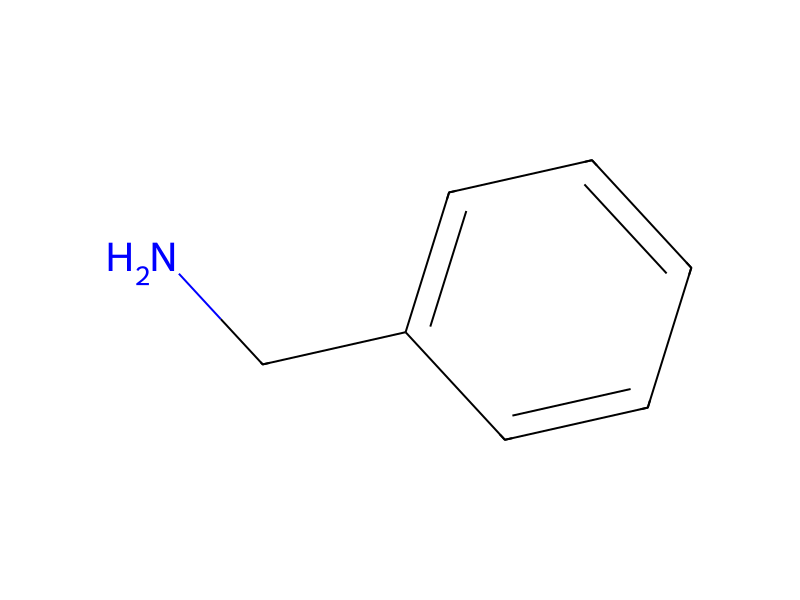

Product 1

Reagents, catalysts & solvents 1

Procedure
2,6-Dichloro-8-azapurine (0.84 mmol), prepared as described in Example 17, was dissolved in n-butanol (4 ml) and benzylamine (1.4 mmol) was added. The reaction mixture was stirred at room temperature overnight. After concentration in vacuo the product was purified by chromatography (SiO2, IV—from 1% MeOH and 0.25% acetic acid to 2% MeOH with 0.35% acetic acid).
Workup
- concentrationAfter concentration in vacuo the product
- customwas purified by chromatography (SiO2, IV—from 1% MeOH and 0.25% acetic acid to 2% MeOH with 0.35% acetic acid)
Sources & evidence
- ORD record
- ord-87563ca009e14ed0b4c70dab98d4688b
- Source dataset
- uspto-grants-2010_10
- Patent number
- US07816350B2
Reaction notes
Loading…