Sodium Carbonate → HCID 59518017, compound
Reaction equation

Br[C:2]1[CH:7]=[CH:6][C:5]([C:8](=[O:10])[CH3:9])=[CH:4][C:3]=1[N+:11]([O-:13])=[O:12].[CH2:14](OB(C=C)OCCCC)[CH2:15]CC.C(=O)([O-])[O-].[Na+].[Na+]>C1COCC1.O>[N+:11]([C:3]1[CH:4]=[C:5]([C:8](=[O:10])[CH3:9])[CH:6]=[CH:7][C:2]=1[CH:14]=[CH2:15])([O-:13])=[O:12]Participants



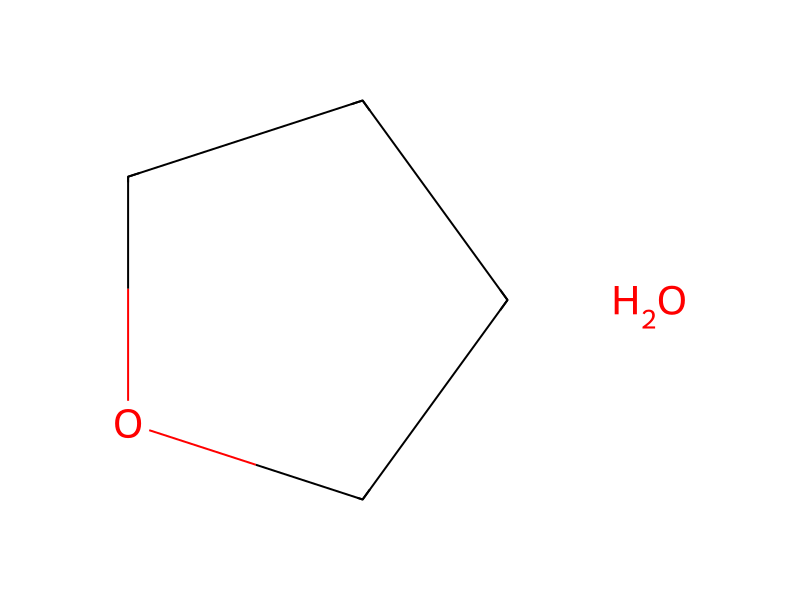
Conditions
- Temperature
- 70 °C
Procedure
To a mixture of 4′-bromo-3′-nitroacetophenone (600 mg, 2.46 mmol), vinylboronic acid dibutyl ester (680 mg, 3.69 mmol), and sodium carbonate (1.83 g, 17.22 mmol) in THF/H2O (12 mL/4 mL) is added dichlorobis(triphenylphospine) palladium (II) (86 mg, 5% mmol). The reaction tube is sealed and the mixture is purged with N2 for 3 min and heated at 70° C. for 1.5 h. Then the mixture is cooled to room temperature and poured into saturated ammonia chloride aqueous solution. The mixture is extracted with ethyl acetate (3×20 mL). The organic extracts are combined, washed with brine and concentrated. The crude product is purified with silica gel column chromatography (20% ethyl acetate in hexanes) to afford 1-(3-Nitro-4-vinyl-phenyl)-ethanone as a yellow solid, 87% yield: ESMS m/z 192.0 (M+H+).
Workup
- customThe reaction tube is sealed
- customthe mixture is purged with N2 for 3 min
- temperatureThen the mixture is cooled to room temperature
- additionpoured into saturated ammonia chloride aqueous solution
- extractionThe mixture is extracted with ethyl acetate (3×20 mL)
- washwashed with brine
- concentrationconcentrated
- customThe crude product is purified with silica gel column chromatography (20% ethyl acetate in hexanes)
Sources & evidence
- ORD record
- ord-ad659d6b225748cc87d5d2efb2a73bd6
- Source dataset
- uspto-grants-2010_10
- Patent number
- US07816542B2
Reaction notes
Loading…