Sodium Carbonate → HCID 178474394, compound
Reaction equation

Br[C:2]1[CH:3]=[C:4]([NH:9][S:10]([C:13]2[CH:18]=[CH:17][C:16]([F:19])=[CH:15][CH:14]=2)(=[O:12])=[O:11])[C:5]([Cl:8])=[N:6][CH:7]=1.B1(B2OC(C)(C)C(C)(C)O2)OC(C)(C)C(C)(C)O1.C([O-])(=O)C.[K+].Br[C:44]1[CH:56]=[CH:55][C:47]2[NH:48][C:49]([NH:51][C:52](=[O:54])[CH3:53])=[N:50][C:46]=2[CH:45]=1.C(=O)([O-])[O-].[Na+].[Na+]>Cl[Pd](Cl)([P](C1C=CC=CC=1)(C1C=CC=CC=1)C1C=CC=CC=1)[P](C1C=CC=CC=1)(C1C=CC=CC=1)C1C=CC=CC=1.CN(C=O)C.O1CCOCC1>[Cl:8][C:5]1[N:6]=[CH:7][C:2]([C:56]2[CH:44]=[CH:45][C:46]3[NH:50][C:49]([NH:51][C:52](=[O:54])[CH3:53])=[N:48][C:47]=3[CH:55]=2)=[CH:3][C:4]=1[NH:9][S:10]([C:13]1[CH:18]=[CH:17][C:16]([F:19])=[CH:15][CH:14]=1)(=[O:12])=[O:11]Participants
Reactant 5




Product 1

Reagents, catalysts & solvents 3



Conditions
- Temperature
- 90 °C
Procedure
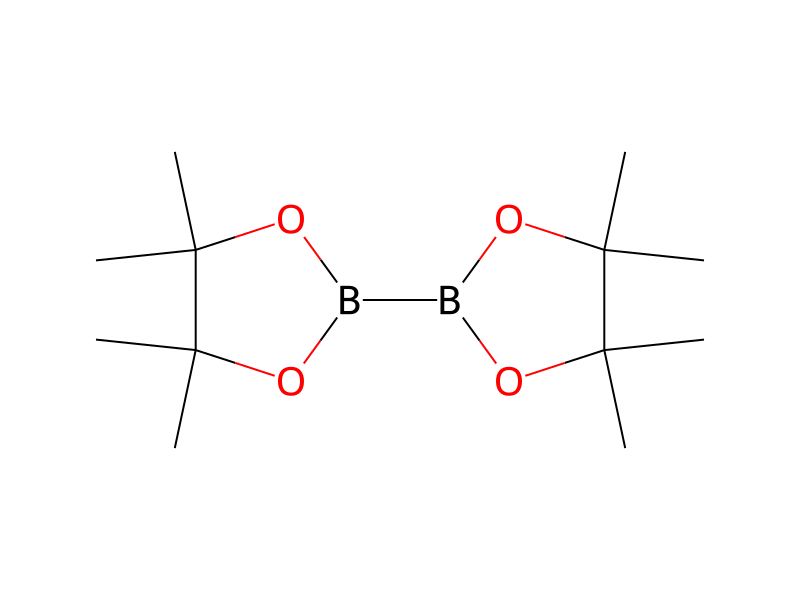
To a 25 mL round-bottomed flask was added N-(5-bromo-2-chloropyridin-3-yl)-4-fluorobenzenesulfonamide (0.150 g, 0.410 mmol) (Step 1, Example 48), bis(pinacolato)diboron (0.156 g, 0.615 mmol, Aldrich, St, Louis, Mo.), potassium acetate (0.161 g, 1.64 mmol) and 1,4-dioxane (4.0 mL). The mixture was carefully evacuated and backfilled with N2. To the solution was added dichloro[1,1′-bis(diphenylphosphino)ferrocene]palladium(II)dichloromethane adduct (0.030 g, 0.041 mmol, Strem Chemical, Inc., Newburyport, Mass.). The mixture was carefully evacuated and backfilled with N2 again. The mixture was stirred at 90° C. for 6 h. The reaction mixture was cooled to rt and to it was added DMF (4.0 mL), N-(5-bromo-1H-benzo[d]imidazol-2-yl)acetamide (0.080 g, 0.31 mmol) and aq sodium carbonate (0.79 mL, 1.6 mmol, 2 M). The mixture was carefully evacuated and backfilled with N2. To the mixture was added trans-dichlorobis(triphenylphosphine)palladium(II) (0.022 g, 0.031 mmol, Strem Chemical, Inc., Newburyport, Mass.). Once again the mixture was carefully evacuated and backfilled with N2. The mixture was stirred at 90° C. for 16 h and then, after cooling to rt, was poured into aq. NaCl (100 mL) and extracted with 25% iPrOH/CHCl3 (3×75 mL). The combined extracts were dried (Na2SO4) and concentrated. The material was then taken up in MeOH/CH2Cl2 and concentrated onto silica. Purification by silica gel chromatography (0.5 to 5.0% MeOH (2 M in NH3)/CH2Cl2) afforded the title compound as a white solid (0.0217 g, 15%). MS (ESI, positive ion) m/z: 460 (M+1). 1H NMR (400 MHz, DMSO-d6) δ ppm 2.18 (s, 3H), 7.37 (br s, 1H), 7.44 (t, J=8.8 Hz, 2H), 7.56 (br s, 1H), 7.70 (br s, 1H), 7.83 (dd, J=8.8, 5.3 Hz, 2H), 7.91 (s, 1H), 8.56 (br s, 1H), 10.44 (br s, 1H), 11.62 (br s, 1H), 12.16 (br s, 1H).
Workup
- customThe mixture was carefully evacuated
- customThe mixture was carefully evacuated
- temperatureThe reaction mixture was cooled to rt and to it
- customThe mixture was carefully evacuated
- customOnce again the mixture was carefully evacuated
- stirringThe mixture was stirred at 90° C. for 16 h
- temperatureafter cooling to rt
- additionwas poured into aq. NaCl (100 mL)
- extractionextracted with 25% iPrOH/CHCl3 (3×75 mL)
- dry with materialThe combined extracts were dried (Na2SO4)
- concentrationconcentrated
- concentrationconcentrated onto silica
- customPurification by silica gel chromatography (0.5 to 5.0% MeOH (2 M in NH3)/CH2Cl2)
Sources & evidence
- ORD record
- ord-ff1136683c90473796faccef2a65389e
- Source dataset
- uspto-grants-2010_10
- Patent number
- US07820665B2
Reaction notes
Loading…