Tepoxalin → 3-[5-(4-chlorophenyl)-1-(4-methoxyphenyl)pyrazol-3-yl]propanoic Acid
Reaction equation

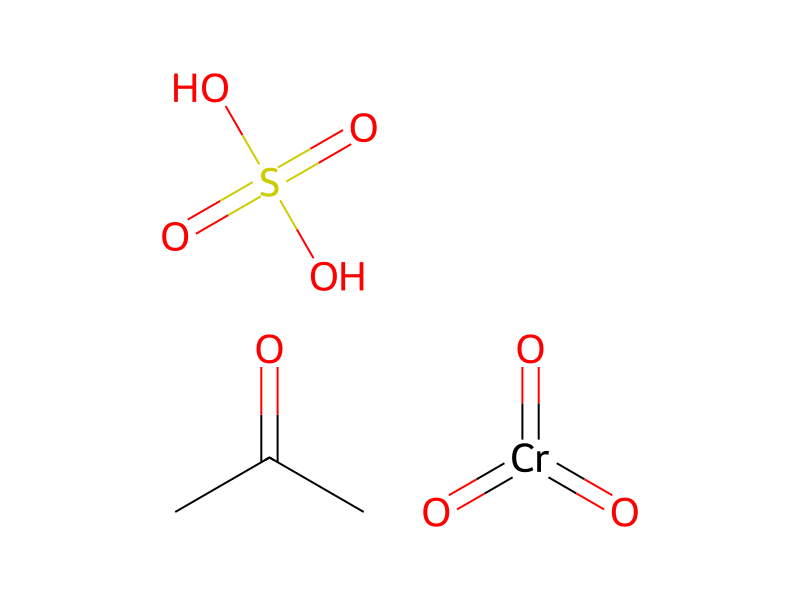
CN(O)[C:3]([CH2:5][CH2:6][C:7]1[CH:8]=[C:9]([C:20]2[CH:21]=[CH:22][C:23]([Cl:26])=[CH:24][CH:25]=2)[N:10]([C:12]2[CH:13]=[CH:14][C:15]([O:18][CH3:19])=[CH:16][CH:17]=2)[N:11]=1)=[O:4].ClC1C=CC(C2N(C3C=CC([O:46]C)=CC=3)N=C(CCCO)C=2)=CC=1.CC(C)=O.OS(O)(=O)=O.O=[Cr](=O)=O>>[Cl:26][C:23]1[CH:22]=[CH:21][C:20]([C:9]2[N:10]([C:12]3[CH:17]=[CH:16][C:15]([O:18][CH3:19])=[CH:14][CH:13]=3)[N:11]=[C:7]([CH2:6][CH2:5][C:3]([OH:46])=[O:4])[CH:8]=2)=[CH:25][CH:24]=1Participants
4



Procedure
Known methods of synthesizing tepoxalin include the following. U.S. Pat. No. 4,826,868 describes reacting the alcohol, 5-(4-chlorophenyl)-1-(4-methoxyphenyl)-1H-pyrazole-3-propanol with Jones reagent to form the acid, 5-(4-chlorophenyl)-1-(4-methoxyphenyl)-1H-pyrazole-3-propanoic acid, which is reacted with dimethylformamide and oxalyl chloride in tetrahydrofuran (“THF”) which is then reacted with methylhydroxylamine hydrochloride and triethylamine in THF.
Sources & evidence
- ORD record
- ord-38b5ac41945a4f3087d2b6d8f6a778ca
- Source dataset
- uspto-grants-2003_09
- Patent number
- US06613914B2
Reaction notes
Loading…