Propylene → Phenol
Reaction equation

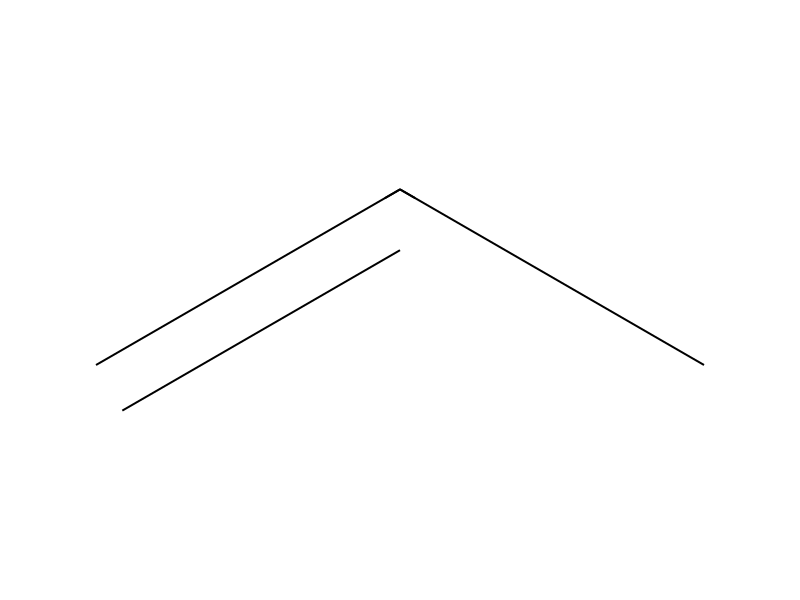
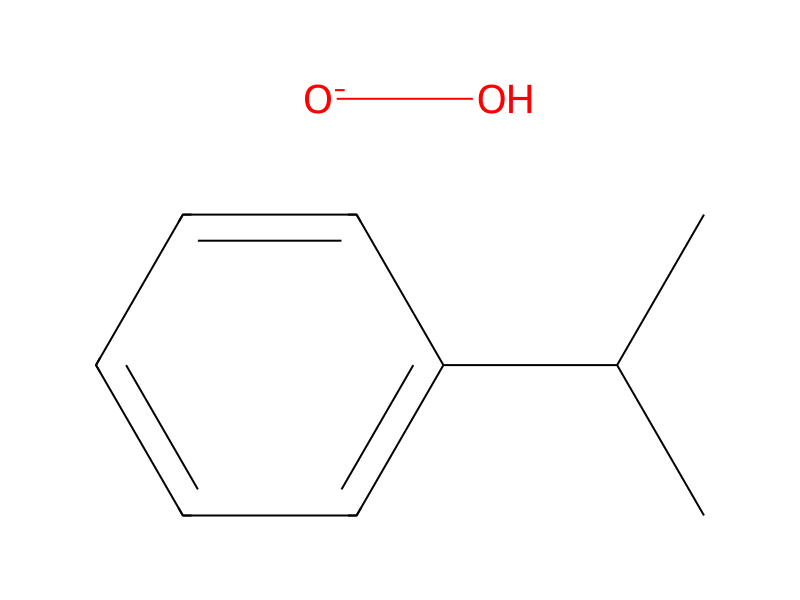
[O-:1]O.[CH:3]([C:6]1[CH:11]=[CH:10][CH:9]=[CH:8][CH:7]=1)(C)[CH3:4].C=CC>>[C:3]([C:6]1[CH:11]=[CH:10][CH:9]=[CH:8][CH:7]=1)(=[O:1])[CH3:4].[C:6]1([OH:1])[CH:11]=[CH:10][CH:9]=[CH:8][CH:7]=1Participants
4


Procedure
Referring to FIG. 4, 8 g of the same catalyst as that in Example 1 is charged in a single catalyst bed, and 10 g/hour of the same solution as that in Example 1 containing 25% by weight of isopropylbenzene hydroperoxide and 9 g/hour of the same propylene as that in Example 1 are fed thereto. The pressure at the catalyst bed is adjusted to 7.0 MPa, and the temperature at the inlet of the catalyst bed is adjusted such that the conversion of the fed isopropylbenzene hydroperoxide becomes 99%. The results of reaction in this case are shown in Table 2, indicating that the yield of propylene decreases and produced amount of acetophenone and phenol formed by thermal decomposition of isopropylbenzene hydroperoxide increases.
Workup
- customThe results of reaction in this case
Sources & evidence
- ORD record
- ord-24cbf45f75c646ff9c5ace292fa722b9
- Source dataset
- uspto-grants-2003_09
- Patent number
- US06620951B2
Reaction notes
Loading…