2,3-Dibromopyridine → Tert-butyl 4-(3-bromopyridin-2-yl)-4-cyanopiperidine-1-carboxylate
Reaction equation

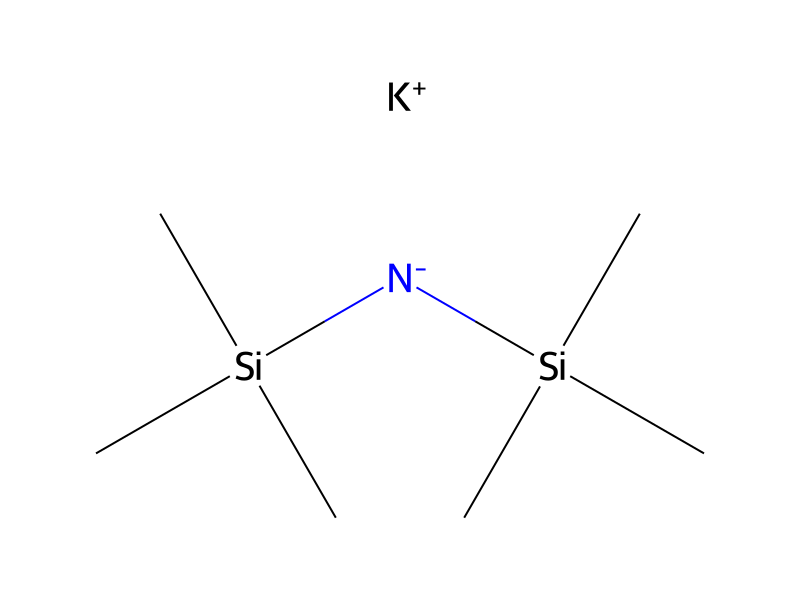
Br[C:2]1[C:7]([Br:8])=[CH:6][CH:5]=[CH:4][N:3]=1.[C:9]([CH:11]1[CH2:16][CH2:15][N:14]([C:17]([O:19][C:20]([CH3:23])([CH3:22])[CH3:21])=[O:18])[CH2:13][CH2:12]1)#[N:10].C[Si](C)(C)[N-][Si](C)(C)C.[K+]>>[Br:8][C:7]1[C:2]([C:11]2([C:9]#[N:10])[CH2:12][CH2:13][N:14]([C:17]([O:19][C:20]([CH3:21])([CH3:23])[CH3:22])=[O:18])[CH2:15][CH2:16]2)=[N:3][CH:4]=[CH:5][CH:6]=1Participants
4



Procedure
2,3-Dibromopyridine (5 g, 21 mmol) and tert-butyl 4-cyanopiperidine-1-carboxylate (3.0 g, 14 mmol) were reacted in the presence of potassium hexamethyldisilazide (17.1 mmol) using the method described in example 8-1 to afford the desired product: tert-butyl 4-(3-bromopyridin-2-yl)-4-cyanopiperidine-1-carboxylate: 1H NMR δ (ppm)(CDCl3): 8.53 (1 H, dd, J 1.5, 4.6 Hz), 7.97 (1 H, dd, J=1.5, 8.0 Hz), 7.18 (1 H, dd, J=4.4, 8.0 Hz), 4.23 (2 H, br s), 3.29 (2 H, br s), 2.48 (2 H, br s), 2.15 (2 H, br s), 1.47 (9 H, s).
Sources & evidence
- ORD record
- ord-3098b25a110a4469a6d981a63144c69c
- Source dataset
- uspto-grants-2010_11
- Patent number
- US07825135B2
Reaction notes
Loading…