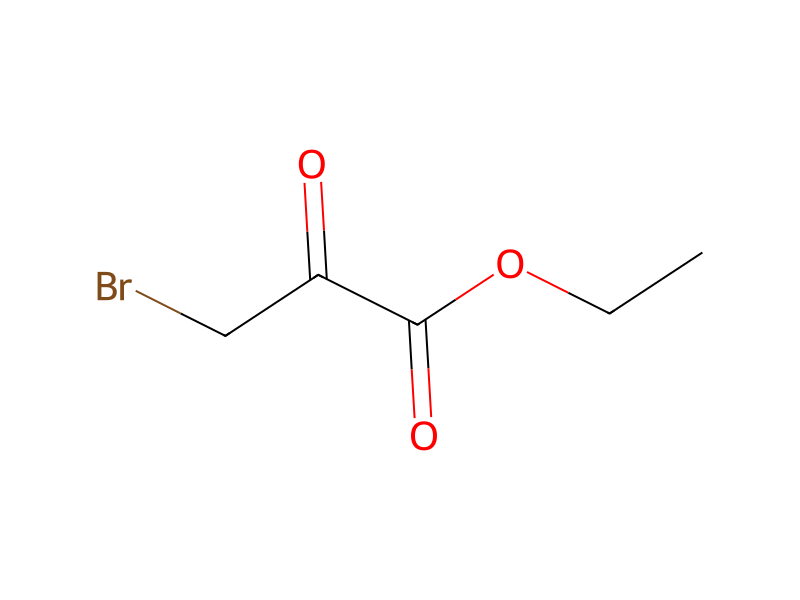
Ethyl bromopyruvate → Ethyl 2-isopropylthiazole-4-carboxylate
Reaction equation

[CH3:1][CH:2]([CH3:6])[C:3](=[S:5])[NH2:4].Br[CH2:8][C:9](=O)[C:10]([O:12][CH2:13][CH3:14])=[O:11]>C(O)C>[CH:2]([C:3]1[S:5][CH:8]=[C:9]([C:10]([O:12][CH2:13][CH3:14])=[O:11])[N:4]=1)([CH3:6])[CH3:1]Participants
4
Reactant 2

Product 1

Reagents, catalysts & solvents 1

Conditions
- Temperature
- 70 °C
Procedure
A solution containing the product from Example 56A (8.6 g, 83.5 mmol) in ethanol (250 mL) was treated with ethyl bromopyruvate (12.6 mL, 100 mmol), and the mixture was heated at 70° C. for 3 hours, cooled to 25° C., concentrated, and partitioned between dichloromethane and saturated NaHCO3. The organic phase was washed with brine and dried over MgSO4, filtered and concentrated to give the title compound (18 g, 57% yield), which was used without further purification.
Workup
- temperaturecooled to 25° C.
- concentrationconcentrated
- custompartitioned between dichloromethane and saturated NaHCO3
- washThe organic phase was washed with brine
- dry with materialdried over MgSO4
- filtrationfiltered
- concentrationconcentrated
Sources & evidence
- ORD record
- ord-0d8fb291c7c048559548fc0fcd047f67
- Source dataset
- uspto-grants-2010_11
- Patent number
- US07834043B2
Reaction notes
Loading…