Acetone → HCID 68695897, compound
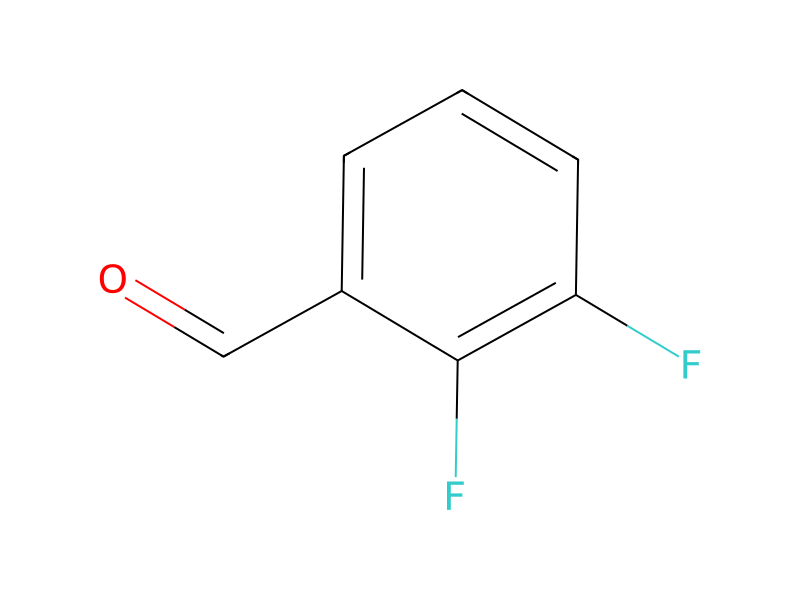
Reaction equation

[CH3:1][C:2]([CH3:4])=[O:3].[F:5][C:6]1[C:13]([F:14])=[CH:12][CH:11]=[CH:10][C:7]=1[CH:8]=O.[OH-].[Na+]>[Cl-].C([N+](C)(C)C)CCCCCCCCCCCCCCC.[Cl-].[Na+].O>[F:5][C:6]1[C:13]([F:14])=[CH:12][CH:11]=[CH:10][C:7]=1[CH:8]=[CH:1][C:2](=[O:3])[CH:4]=[CH:8][C:7]1[CH:10]=[CH:11][CH:12]=[C:13]([F:14])[C:6]=1[F:5]Participants
6




Procedure
To a solution of 0.5 g (8.61 mmol) of acetone and 2.51 g (17.65 mmol) of 2,3-difluoro benzaldehyde in 86 mL of a 0.25M solution of aqueous NaOH (21.52 mmol) was added 1.13 mL (0.86 mmol) of a 25% w/w aqueous solution of cetyltrimethylammonium chloride. The mixture was allowed to stir vigorously at room temperature for 48 hours, at which point it was diluted with 100 ml of brine and extracted with two 75 mL portions of methylene chloride. The organic phase was dried over anhydrous MgSO4 and concentrated in vacuo. The residue was recrystallized from ethyl acetate to provide 110 mg (4%) of a yellow powder.
Workup
- extractionextracted with two 75 mL portions of methylene chloride
- dry with materialThe organic phase was dried over anhydrous MgSO4
- concentrationconcentrated in vacuo
- customThe residue was recrystallized from ethyl acetate
Sources & evidence
- ORD record
- ord-72ee159726884aff875fc23ea2c2fc6d
- Source dataset
- uspto-grants-2010_11
- Patent number
- US07842705B2
Reaction notes
Loading…