Potassium Hydroxide → 3-(5-nitro-1H-indol-3-yl)-1-azabicyclo[2.2.2]oct-2-ene
Reaction equation

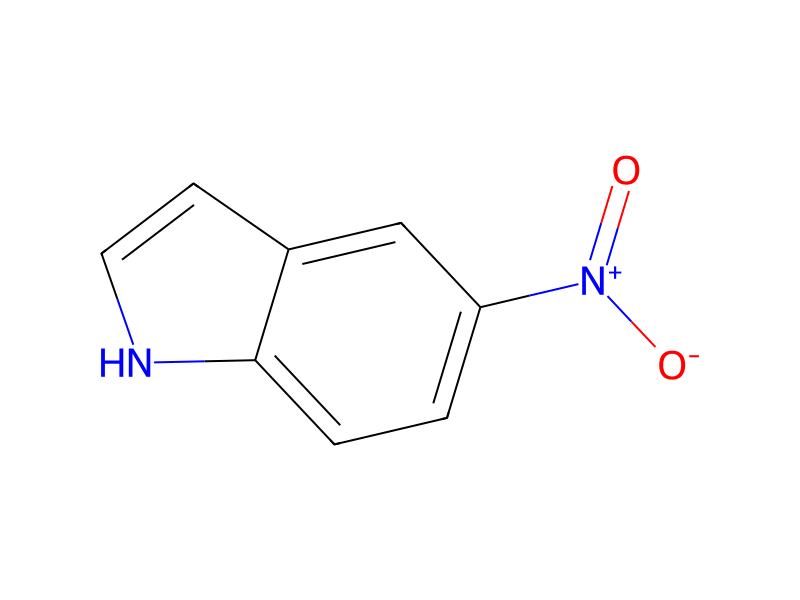
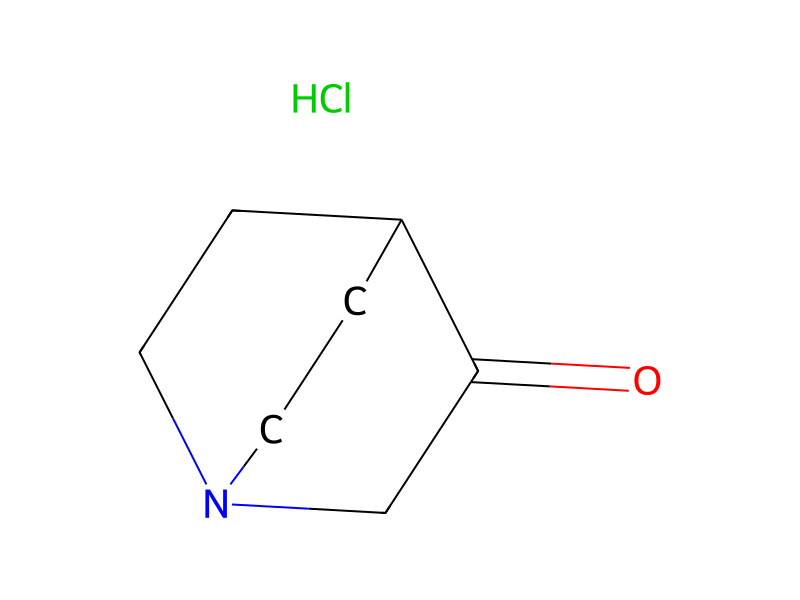
Cl.[N:2]12[CH2:9][CH2:8][CH:5]([CH2:6][CH2:7]1)[C:4](=O)[CH2:3]2.[OH-].[K+].[N+:13]([C:16]1[CH:17]=[C:18]2[C:22](=[CH:23][CH:24]=1)[NH:21][CH:20]=[CH:19]2)([O-:15])=[O:14]>O.CO>[N+:13]([C:16]1[CH:17]=[C:18]2[C:22](=[CH:23][CH:24]=1)[NH:21][CH:20]=[C:19]2[C:4]1[CH:5]2[CH2:8][CH2:9][N:2]([CH2:7][CH2:6]2)[CH:3]=1)([O-:15])=[O:14]Participants
5



Procedure
44.8 mmol of 1-azabicyclo[2.2.2]octan-3-one hydrochloride (3-quinuclidinone hydrochloride) and 112 mmol of potassium hydroxide are added to a solution of 22.4 mmol of 5-nitro-1H-indole in 100 ml of water/methanol (1/1), and the mixture is stirred at the boiling point for 48 hours. The crystals which deposit on cooling of the reaction solution are filtered off, washed and dried, giving 3-(5-nitro-1H-indol-3-yl)-1-azabicyclo[2.2.2]-oct-2-ene.
Workup
- temperatureThe crystals which deposit on cooling of the reaction solution
- filtrationare filtered off
- washwashed
- customdried
Sources & evidence
- ORD record
- ord-513ca5a922ae48aba26dcd556aa83060
- Source dataset
- uspto-grants-2007_10
- Patent number
- US07279496B2
Reaction notes
Loading…