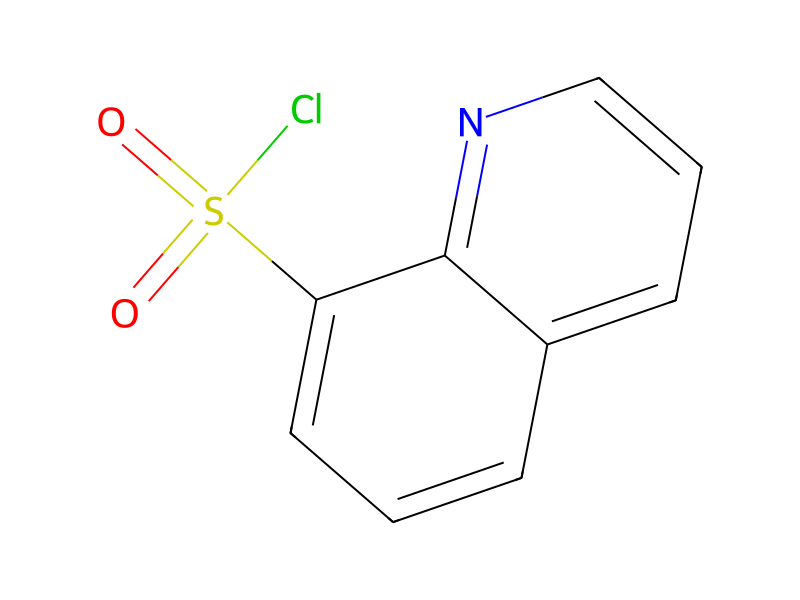
8-Quinolinesulfonyl chloride → HCID 86690032, compound
Reaction equation

[NH2:1][C:2]1[CH:3]=[C:4]([N:8]2[C:17]3[CH:16]=[CH:15][C:14]4[CH2:18][CH2:19][CH2:20][CH2:21][C:13]=4[C:12]=3[NH:11][C:10](=[O:22])[C:9]2=[O:23])[CH:5]=[CH:6][CH:7]=1.[N:24]1[C:33]2[C:28](=[CH:29][CH:30]=[CH:31][C:32]=2[S:34]([Cl:37])(=[O:36])=[O:35])[CH:27]=[CH:26][CH:25]=1>>[ClH:37].[O:22]=[C:10]1[NH:11][C:12]2[C:13]3[CH2:21][CH2:20][CH2:19][CH2:18][C:14]=3[CH:15]=[CH:16][C:17]=2[N:8]([C:4]2[CH:3]=[C:2]([NH:1][S:34]([C:32]3[CH:31]=[CH:30][CH:29]=[C:28]4[C:33]=3[N:24]=[CH:25][CH:26]=[CH:27]4)(=[O:35])=[O:36])[CH:7]=[CH:6][CH:5]=2)[C:9]1=[O:23]Participants
3


Procedure
4-(3-Aminophenyl)-1,4,7,8,9,10-hexahydrobenzo[f]quinoxaline-2,3-dione (30 mg, 0.097 mmol) and 8-quinolinesulfonyl chloride (33 mg, 0.146 mmol) were used in a process similar to Example 9 to give the titled compound (a pale yellow amorphous, 7 mg, yield 13%).
Sources & evidence
- ORD record
- ord-8fd55c9b4fa545968919d4874044ca8d
- Source dataset
- uspto-grants-2014_03
- Patent number
- US08673915B2
Reaction notes
Loading…