1,2-Dibromoethane → Ethyl 1-(pyridin-3-yl)cyclopropane-1-carboxylate
Reaction equation

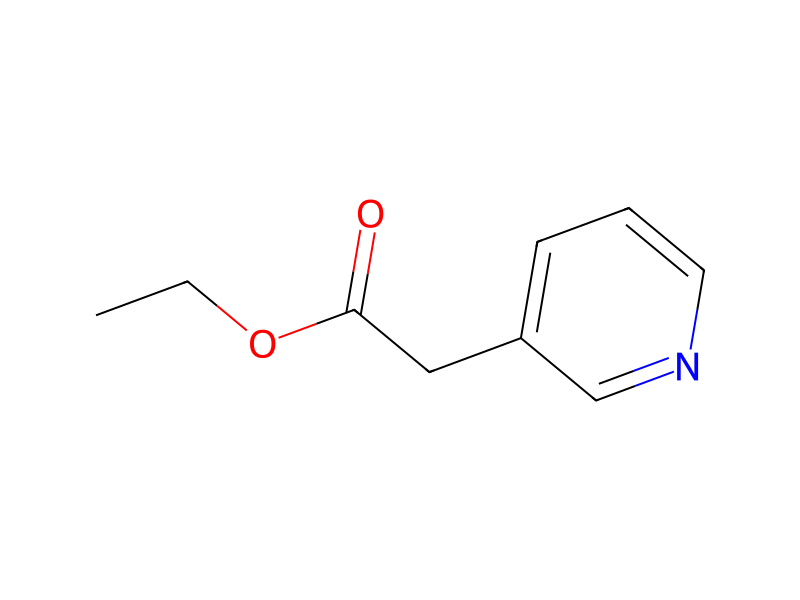
[N:1]1[CH:6]=[CH:5][CH:4]=[C:3]([CH2:7][C:8]([O:10][CH2:11][CH3:12])=[O:9])[CH:2]=1.Br[CH2:14][CH2:15]Br>>[N:1]1[CH:6]=[CH:5][CH:4]=[C:3]([C:7]2([C:8]([O:10][CH2:11][CH3:12])=[O:9])[CH2:15][CH2:14]2)[CH:2]=1Participants
3


Procedure
Prepared in a similar manner to that described above by reacting ethyl 2-pyridin-3-ylacetate with 1,2-dibromoethane to give ethyl 1-pyridin-3-ylcyclopropane-1-carboxylate which was then hydrogenated to give the desired compound as a brown oil (quantitative reaction).
Workup
- customPrepared in a similar manner to that
Sources & evidence
- ORD record
- ord-f4a2c2a833164fa2bea2a3f9753a4a20
- Source dataset
- uspto-grants-2014_03
- Patent number
- US08673938B2
Reaction notes
Loading…