4-tert-Butylcyclohexanone → 4-tert-butyl-1,1-difluorocyclohexane
Reaction equation

F[B-](F)(F)F.[C:6]([CH:10]1[CH2:15][CH2:14][C:13](=O)[CH2:12][CH2:11]1)([CH3:9])([CH3:8])[CH3:7].[FH:17].[FH:18].F.C(N(CC)CC)C.C(=O)(O)[O-].[Na+]>ClCCl>[C:6]([CH:10]1[CH2:15][CH2:14][C:13]([F:18])([F:17])[CH2:12][CH2:11]1)([CH3:9])([CH3:8])[CH3:7]Participants

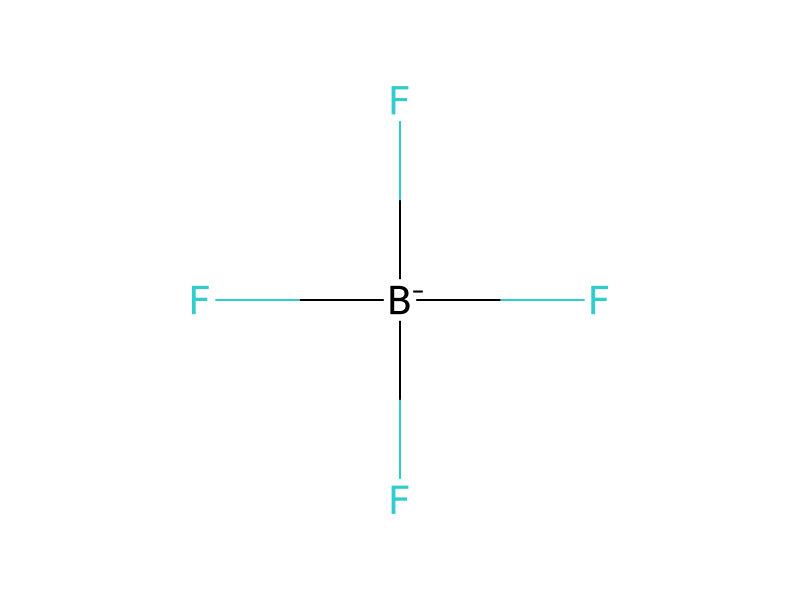




Procedure
To a suspension of diethylaminosulfinium tetrafluoroborate (593 mg, 2.6 mmol) in dichloromethane (10 mL) at room temperature is added 4-tert-butylcyclohexanone (200 mg, 1.3 mmol) and triethylamine trihydrofluoride (266 μl, 1.3 mmol). The reaction mixture is stirred for 4 hours, then an aqueous solution of sodium bicarbonate (5%) is added and stirring is continued for 30 minutes. The organic phase is isolated and dried with magnesium sulphate. The solution is diluted with pentane (10 mL) and the solution is passed through a pad of silica gel with pentane elution. Solvent are evaporated in vacuo to provide 4-t-butyl-1,1-difluorocyclohexane (120 mg, 53%) as a clear liquid, admixed with 3% of the corresponding vinyl fluoride. Major compound: 1H NMR (CDCl3) 2.09-1.95 (m, 2H), 1.76-1.67 (m, 2H), 1.65-1.51 (m, 2H), 1.30-1.15 (m, 2H), 1.02-0.97 (s, 1H), 0.80 (s, 9H); 19F NMR (CDCl3)-91.9 (d, J=232.6 Hz, 1F), −103.5 (dm, J=232.6 Hz, 1F).
Workup
- stirringstirring
- waitis continued for 30 minutes
- customThe organic phase is isolated
- dry with materialdried with magnesium sulphate
- additionThe solution is diluted with pentane (10 mL)
- washthe solution is passed through a pad of silica gel with pentane elution
- customSolvent are evaporated in vacuo
Sources & evidence
- ORD record
- ord-63f0e535493442b88f2afd8bc1231879
- Source dataset
- uspto-grants-2014_03
- Patent number
- US08680332B2
Reaction notes
Loading…