Tetrafluoroborate → Ethyl-4,4-difluorocyclohexane carboxylate
Reaction equation

F[B-](F)(F)F.CCCC[N+](CCCC)(CCCC)CCCC.[FH:23].[F-:24].[C:25]([CH:30]1[CH2:35][CH2:34][C:33](=O)[CH2:32][CH2:31]1)([O:27][CH2:28][CH3:29])=[O:26]>ClCCl>[C:25]([CH:30]1[CH2:35][CH2:34][C:33]([F:24])([F:23])[CH2:32][CH2:31]1)([O:27][CH2:28][CH3:29])=[O:26]Participants
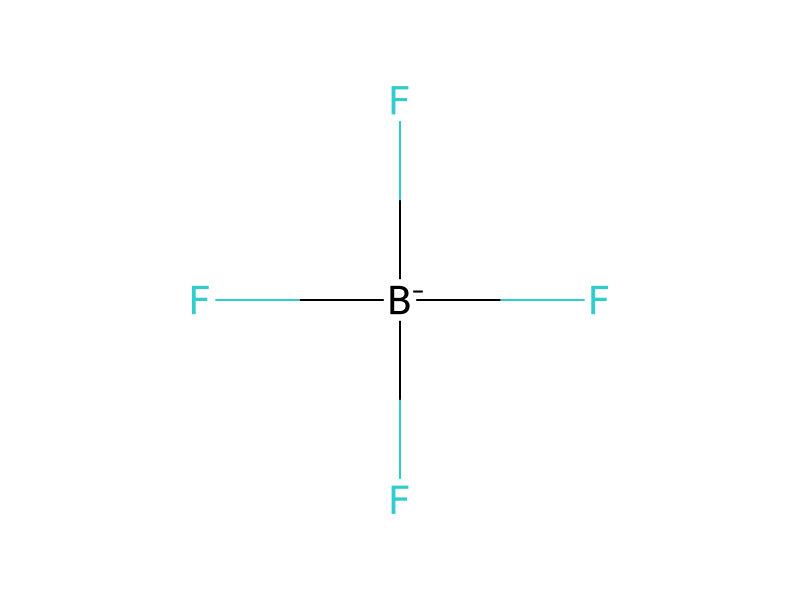



Procedure
To an ice-cold suspension of diethylaminodifluorosulfinium tetrafluoroborate (458 mg, 2.0 mmol) and tetrabutylammonium hydrogen difluoride (463 mg, 2.0 mmol) in dichloromethane (3.0 mL) under nitrogen is added 4-carboethoxycyclohexanone (159 μl, 1.0 mmol). The reaction mixture is allowed to warm to room temperature and stirred for 4 h. The reaction mixture is quenched at room temperature with a saturated aqueous ammonium chloride solution, stirred for 15 min, and the resulting mixture is extracted twice using dichloromethane. The organic phases are combined, dried over magnesium sulfate, filtered and concentrated. The crude product is passed through a pad of silica gel using pentane to provide 1-carboethoxy-4,4-difluorocyclohexane (130 mg, 68%) as a clear oil.
Workup
- customThe reaction mixture is quenched at room temperature with a saturated aqueous ammonium chloride solution
- stirringstirred for 15 min
- extractionthe resulting mixture is extracted twice using dichloromethane
- dry with materialdried over magnesium sulfate
- filtrationfiltered
- concentrationconcentrated
Sources & evidence
- ORD record
- ord-70ec3e09b81344e8b727ff26f4b030ca
- Source dataset
- uspto-grants-2014_03
- Patent number
- US08680332B2
Reaction notes
Loading…