Acetonitrile → HCID 14991366, compound
Reaction equation

Cl[C:2]1[C:11]2[C:6](=[CH:7][CH:8]=[C:9]([CH3:12])[CH:10]=2)[N:5]=[C:4]([CH3:13])[CH:3]=1.[CH3:14][S-:15].[Na+].C(#N)C>O>[CH3:13][C:4]1[CH:3]=[C:2]([S:15][CH3:14])[C:11]2[C:6](=[CH:7][CH:8]=[C:9]([CH3:12])[CH:10]=2)[N:5]=1Participants
5
Reactant 3


Product 1

Reagents, catalysts & solvents 1

Procedure
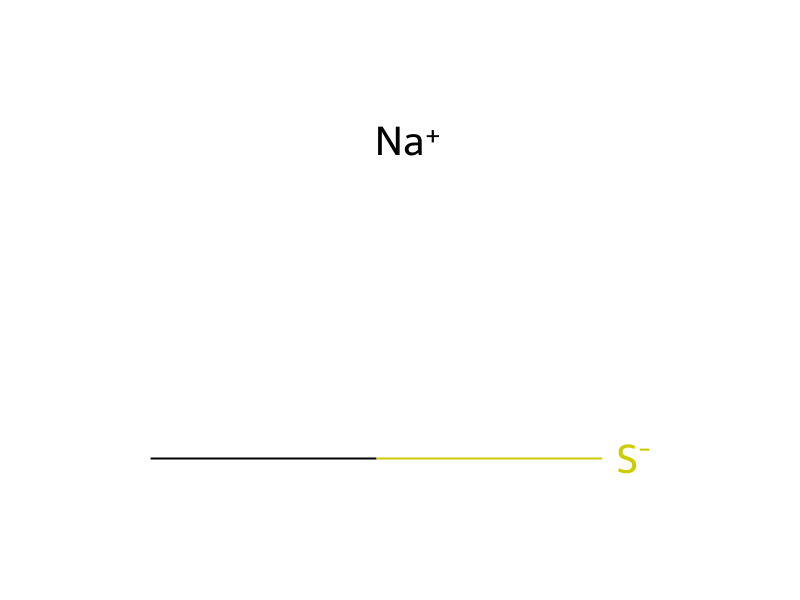
A mixture of 4-chloro-2,6-dimethylquinoline (0.5 g, prepared as described in Example 1), sodium thiomethoxide (0.55 g) and dry acetonitrile (20 ml) was heated to reflux under an atmosphere of argon for 15 hours. After cooling to laboratory temperature the mixture was poured into water (50 ml) and extracted with ethyl acetate (2×50 ml). The combined organic layers were dried over magnesium sulphate and evaporated to leave 2,6-dimethyl-4methylthioquinoline as a white solid (0.52 g) which was used without further purification.
Workup
- temperaturewas heated
- temperatureto reflux under an atmosphere of argon for 15 hours
- temperatureAfter cooling to laboratory temperature the mixture
- extractionextracted with ethyl acetate (2×50 ml)
- dry with materialThe combined organic layers were dried over magnesium sulphate
- customevaporated
Sources & evidence
- ORD record
- ord-c296313bf6ac4033bb08018ebbb1a207
- Source dataset
- uspto-grants-1992_05
- Patent number
- US05112837
Reaction notes
Loading…